
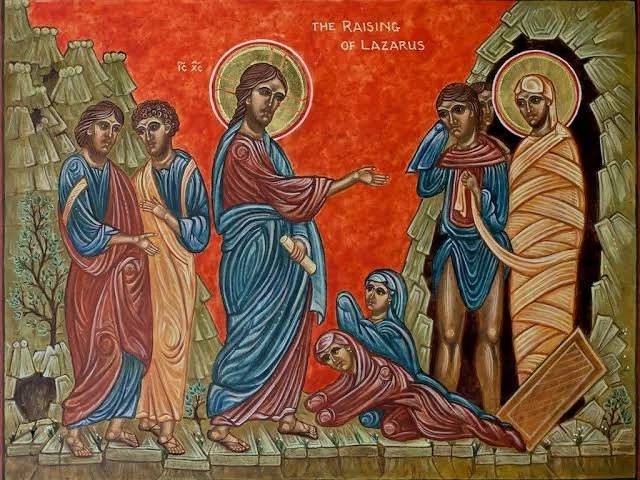
Blessed Grief (Sermon on the Mount, Part 2)

( Matthew 5:1 ) “Seeing the crowds, (Jesus) went up on the mountain, and when he sat down, his disciples came to him.

And he opened his mouth and taught them, saying:

“Blessed are the poor in spirit, for theirs is the kingdom of heaven.”

“Blessed are those who mourn, for they shall be comforted.”

Journeying through the whole of scripture, from Genesis through Revelation, I am convinced that “Good news of THE KINGDOM OF THE HEAVENS” is the prevailing theme; the persistent heartbeat and unwavering desire of the LORD God to personally DWELL with us, his people, as God and King.

Revelation 21:3 succinctly articulates this horizon:

“And I heard a loud voice from the throne saying, “Behold, the dwelling place of God is with mankind. He will dwell with them, and they will be his people, and God himself will be with them as their God.”

In this light, Dallas Willard described the Gospel of the in-breaking Kingdom that Jesus himself preaches as, “the present availability of the with-God life”. As we follow this thread, the question emerges: what is this Kingdom LIKE? What does it mean for us to enter into this life of the Kingdom of the Heavens, here and now, and forever? What is the culture, character, the social and personal implications of a “with-God life”? In the hopes of journeying our way into an answer to these questions, this year I will take a deep dive into Jesus’ body of teaching on the Kingdom that we find in Matthew 5-7; the Sermon on the Mount.

Dallas Willard describes Jesus’ most common method of teaching - particularly with regards to the Kingdom of the Heavens - as “challenging the prevailing assumptions” of his listeners. (“You have heard it said… But I say to you…”) He consistently turns the value system of the world - and its vision of “the good life” - on its head, and invites us to REPENT (change our mind), and begin living according to the entirely different version of reality that he is confronting us with.

And so it is with the Beatitudes: Jesus begins the Sermon on the Mount, declaring as “blessed”, a whole list of people whom common sense logic declare, objectively, to NOT be blessed; possibly even UN-blessable.

“Blessed are the impoverished” (spiritually, or otherwise)

“Blessing are the grieving, and brokenhearted”

“Blessed are the shy, the socially invisible and run-over”…

Because we are all inveterate moralists at heart, we tend to go to great lengths trying to interpret these categories/situations of people in a positive light on their own terms; to make them inherently commendable (ie. “poor in spirit” = “humble”), and make new religious guidelines of them. But to do so misses the whole point.

In the Beatitudes the blessing isn’t the CONDITION. The blessing is the KINGDOM.

The Kingdom of the Heavens, which is now at hand and available to you in Jesus, no matter HOW you stack up according to the value systems and power structures of the world. It’s in this light that Jesus can say, “Blessed are those who MOURN - “when you feel you’ve lost what is most dear to you” (MSG) - the brokenhearted, grieving, and tearful - for they shall be comforted.”

Because the Kingdom of the Heavens is at hand, there is comfort for grief.

Thanks be to God.

There is comfort, because in Christ and his Kingdom, we know that we do not grieve ALONE, and we will not grieve FOREVER.

—

In John chapter 11, we find the story of the death of Lazarus.

Jesus is traveling around teaching, ministering, healing the sick and freeing the spiritually oppressed when word is sent to him that this man - Lazarus - has fallen dangerously ill. Lazarus was the brother of Mary and Martha, who by all accounts were some of Jesus’ closest personal friends. In fact, the message that Mary and Martha send along to Jesus was simply, “Lord, he whom you love is ill.” A couple of verses later, John again reiterates the point. He tells us that “Jesus loved Martha and her sister and Lazarus.” There were a lot of people around Jesus most of the time, but it’s made plain that these folks were not just a few more faces in the crowd.

For reasons that are not immediately clear to us, though, Jesus does not rush to Lazarus. In fact, we are told that after receiving that urgent message, he stayed where he was for two more days. And, by the time he and his disciples finally do begin to make their way towards Bethany, Lazarus has already died. Why did he stay away? Why did he not come sooner? These are questions that we’ll have to seek the answers for in time. But whatever the case may be, as Jesus arrives in Bethany we know that he’s no longer headed to the hospital to visit a sick man; he’s headed to the cemetery to mourn a dead man. And, whatever the circumstances and questions swirling around the timing of Jesus’ arrival, we cannot miss the significance of this: Jesus DOES mourn.

“Now when Mary came to where Jesus was and saw him, she fell at his feet, saying to him, “Lord, if you had been here, my brother would not have died.” When Jesus saw her weeping, and the Jews who had come with her also weeping, he was deeply moved in his spirit and greatly troubled. And he said, “Where have you laid him?” They said to him, “Lord, come and see.” Jesus wept. So the Jews said, “See how he loved him!” But some of them said, “Could not he who opened the eyes of the blind man also have kept this man from dying?” - (John 11:32-37 ESV)

Jesus wept.

As Jesus weeps with and for his loved ones, we witness the tears of God. We see the sovereign one - for whom life, death, and the very cosmos spins around in the palm of his hand - crumpling to his knees, tears streaming down his face, mourning. Sharing in the suffering of his people to the point that he is overcome. The lower jaw of God himself begins to clench and quiver, his eyes glass over with tears, and he loses it in front of all these people. “See how he loved him!” they say.

What do we do with a God who weeps; not in powerlessness, but for love?

Paradoxically and profoundly, it is in the discomfort of Jesus that we find hope for our own comfort restored. Because, as we see in Jesus the heart of a creator God who, compelled by love, enters into and inhabits the journey of suffering and loss and mourning alongside of us, we come to understand that no matter where we are, no matter what we have lost and how broken that loss has left us, we have never been left to mourn alone. The willing, real grief of God becomes makes a way unto our healing… Which is, of course, the Gospel.

“Blessed are those who mourn”. Because, in the loving tears of Christ, we come to know that we do not mourn alone.

—

It is incredible, and totally unheard of - even blasphemous - to consider under almost any other worldview or system of religious thought, but the God we meet in Jesus is a God who suffers with us, and shares our tears. Isaiah refers to Jesus as a “Man of sorrows, acquainted with grief”; “Surely he has borne our griefs and carried our sorrows… upon him was the chastisement that brought us peace, and with his wounds we are healed.”

So Jesus suffers and he mourns, but that is only half the equation. And as profound as it truly is, on its own that is not enough. The tears of Jesus are not enough to make hope possible. Because if Jesus is only a co-sufferer; if all he has to offer are his tears, then he is little more than just a really good friend. But Jesus is more than that; oh so infinitely more! Yes, Jesus has tears. But it turns out that the tears of God are profoundly different from our tears. They are tears of love, not powerlessness.

Our mourning - human mourning - is an expression of the sadness and heartache that comes from being in a place of powerlessness and loss. We mourn, because we have lost someone or something that we have absolutely no power to bring back, so our tears are tears of emptiness and frustration and injustice. Human mourning is a sadness that has no place to go for consolation - with no escape from the emptiness - so we end up depressed, or destructively angry. Eventually our hearts get tired, and we resign ourselves to the fact that there’s nothing that can be done. And so, we then do our best to carry on, trusting that the passage of time will dull the pain.

One of my new favorite recording artists, describing the grief of losing his father, puts it this way:

“So hang onto the hurting

And let it grab a hold

Yeah, the only thing’s for certain

Is it’s out of my control

And, grief is only love that’s got no place to go.”

-Stephen Wilson Jr.

These are our tears: Love, with no recourse for loss. Powerlessness, in the face of pain. But the tears of Jesus are not tears of powerlessness. In fact, they are quite the opposite. When Jesus hears that Lazarus has fallen ill, scripture says that Jesus tells his disciples: ”This illness does not lead to (end in) death. It is for the glory of God, so that the Son of God may be glorified through it.”

Of course, Jesus then proceeds to stay where he is, Lazarus succumbs to his sickness and dies, and then Jesus and his disciples finally arrive in Bethany in the midst of this community’s time of mourning. As we have discussed already, the heart of Jesus is “deeply moved” by this scene; he is troubled, and he mourns. But, our English translations of the originally Greek New Testament can be a little misleading here. Because where our bibles tell us that Jesus was “deeply moved”, the word being translated is “embrimaomai”. The emotional thrust of this term is more akin to prophetic anger; righteous indignation. (Literally: “Snorting of horses” - An image of nostril-flaring offense)

Jesus sees the pain of these people whom he loves, he comes face to face with the evil of death and loss that has thrust itself upon the very-good creation of God and laid waste to these persons, created in love and reflecting the image of God himself. And, what is his response? Jesus doesn’t just get weepy… He gets heart-rendingly pissed off.

This Jesus, who proclaims that he himself is the resurrection and the life that humanity’s hopes hang upon, with tears still in his eyes, walks up to death itself and just throws down. Jesus steps up to the grave of his friend and declares the authority to overturn death and loss. “Lazarus!” Jesus speaks into the darkness of the grave; “Come out.” And Lazarus gets up, and walks out of his own grave.

Do you think the tone of that party changed a bit?

What we realize is that even though you and I may be powerless to stand up to death, powerless to restore those things that have been lost and left us broken and a little less whole, Jesus is not. He is the one who declares victory over death and brokenness, and he is the one who will restore all things to rights. As dramatic as the whole Lazarus episode may have been, this was only a picture and preview of what Jesus will one day work over all of creation itself; made possible by the price paid, and the victory secured, through his own death and resurrection.

“Then I saw a new heaven and a new earth, for the first heaven and the first earth had passed away, and the sea was no more. And I saw the holy city, new Jerusalem, coming down out of heaven from God, prepared as a bride adorned for her husband. And I heard a loud voice from the throne saying, “Behold, the dwelling place of God is with man. He will dwell with them, and they will be his people, and God himself will be with them as their God. He will wipe away every tear from their eyes, and death shall be no more, neither shall there be mourning, nor crying, nor pain anymore, for the former things have passed away…. And he who was seated on the throne said, “Behold, I am making all things new.” (Revelation 21:1-5)

“Blessed are those who mourn, for they will be comforted.”, Jesus says.

The Apostle Paul later reflects, “(we do) not grieve as others do, who have no hope” (1 Thessalonians 4:13)

Rather, in light of the victory of Jesus, we believe and can cling to the knowledge that in the end even the most unspeakable losses will be completely overcome and undone. It isn’t just that in light of heaven we will somehow forget the pain and losses of this present life, but even that the victory of Jesus goes backwards as well as forwards. Jesus does not only redeem our future. One day, in his glory and utter victory, he will redeem and restore our past, too. And, that is why Jesus can say “Blessed are those who mourn.”; because he knows that when Heaven crashes into Earth, the deeper our wounds have gone, the more deeply his healing grace will go… “They will be comforted.”

C.S. Lewis put it this way: that “Heaven, once attained, will work backwards and turn even agony into glory”. In the Lord of the Rings, JRR Tolkien envisions a time in which “everything sad is going to come untrue.” (Keller, ‘Pain and Suffering’ p.118)

One of our great Advent hymns captures it well:

Come, you disconsolate, where’er you languish;

come to the mercy seat, fervently kneel.

Here bring your wounded hearts, here tell your anguish;

earth has no sorrows that heaven cannot heal.

Joy of the desolate, light of the straying,

hope of the penitent, fadeless and pure!

Here speaks the Comforter, in mercy saying,

“Earth has no sorrows that heaven cannot cure.”

Here see the bread of life; see waters flowing

forth from the throne of God, pure from above.

Come to the feast prepared; come, ever knowing

earth has no sorrows but heaven can remove.

Amen.

Blessed Poverty (Sermon on the Mount, Part 1)

盧淳天 NO Sooncheon, “Empty Man” 空洞的人

( Matthew 4:23 ) “And (Jesus) went throughout all Galilee, teaching in their synagogues and proclaiming the gospel of the kingdom and healing every disease and every affliction among the people. So his fame spread throughout all Syria, and they brought him all the sick, those afflicted with various diseases and pains, those oppressed by demons, those having seizures, and paralytics, and he healed them. And great crowds followed him from Galilee and the Decapolis, and from Jerusalem and Judea, and from beyond the Jordan.

Seeing the crowds, he went up on the mountain, and when he sat down, his disciples came to him.

And he opened his mouth and taught them, saying:

“Blessed are the poor in spirit, for theirs is the kingdom of heaven.”

Or:

“Blessed are the spiritual zeros - the spiritually bankrupt, deprived and deficient, the spiritual beggars, those without a wisp of “religion” - when the Kingdom of God comes upon them” ( D. Willard )

———-

Journeying through the whole of scripture, from Genesis through Revelation, I am convinced that “Good news of THE KINGDOM OF THE HEAVENS” is the prevailing theme; the persistent heartbeat and unwavering desire of the LORD God to personally DWELL with us, his people, as God and King.

Revelation 21:3 succinctly articulates this horizon:

“And I heard a loud voice from the throne saying, “Behold, the dwelling place of God is with mankind. He will dwell with them, and they will be his people, and God himself will be with them as their God.”

In this light, Dallas Willard described the Gospel of the in-breaking Kingdom that Jesus himself preaches as, “the present availability of the with-God life”. As we follow this thread, the question emerges: what is this Kingdom LIKE? What does it mean for us to enter into this life of the Kingdom of the Heavens, here and now, and forever? What is the culture, character, the social and personal implications of a “with-God life”? In the hopes of journeying our way into an answer to these questions, this year I will take a deep dive into Jesus’ body of teaching on the Kingdom that we find in Matthew 5-7; the Sermon on the Mount.

———

Considering the announcements of the Kingdom that we find in the words of Mary (Luke 1:46-55), and John the Baptist (Luke 3:2-6), and in the first public words of Jesus himself (Luke 4:16-19), we can conclude that, whatever this Kingdom is going to be, it will be unexpected, surprising, and will not operate according to the terms of any earthly kingdom that we are familiar with. The Kingdom of the Heavens is the advent of a whole new manner of world, a new way of being alive. As such, it also means the end of that way of life - according to the flesh, the world, etc. - that we had known, beforehand.

In Matthew 4, the movement is starting to pick up steam. Jesus has gotten to work: calling his first disciples, proclaiming the arrival of this new Kingdom, and substantiating that claim with demonstrations of power (“healing every disease and every affliction among the people.”) Consequently, people are beginning to take notice.

“So his fame spread throughout all Syria, and they brought him all the sick, those afflicted with various diseases and pains, those oppressed by demons, those having seizures, and paralytics, and he healed them. And great crowds followed him from Galilee and the Decapolis, and from Jerusalem and Judea, and from beyond the Jordan.” (Matthew 4:24–25)

And Jesus, Matthew tells us, also takes notice of what is happening. Matthew chapter 5 begins: “Seeing the crowds…”

Jesus, sees the crowds… With all their hopes and hurts and expectations and discontents and tumbled, revolutionary visions of what a new, messianic kingdom will mean for them, for Israel, for the future. Elsewhere in Matthew, he tells us, “When (Jesus) saw the crowds, he had compassion for them, because they were harassed and helpless, like sheep without a shepherd.” (Matthew 9:36)

Jesus sees the crowds, and he knows the jumbled mess of what is going on inside of them as healings are happening, and excitement is growing, and momentum is building… So he climbs the hill, sits down, and begins to teach them; to tell them what this Kingdom that he is announcing, and embodying, is like. And, from his very first words he proceeds to turn the world upside down. “The revolution”, Jesus tells them, “isn’t going to be what you expect… It is much, much bigger than that.”

Oftentimes, in order to build something new, you need to tear down an old preexisting structure that’s in the way. And here, at the foundation-laying of Jesus’ new Kingdom, he begins by dismantling how we understand “the good life”; declaring as BLESSED, those who in the economy of the world would be considered cursed, or even UN-bless-able.

The poor, the mourning, the meek, the hungry and thirsty, the injured, the innocently naive, the embattled and persecuted… BLESSED. Why? How can it be that poverty and lack and vulnerability and need could be considered blessings, assets to the people of God? According to Jesus:

Our need is the very space into which the Kingdom of the Heavens will come.

This is how Jesus begins: “Blessed are the poor in spirit, for theirs is the Kingdom of Heaven” That is to say - as Dallas Willard paraphrases it, “Blessed are the spiritual zeros - the spiritually bankrupt, deprived and deficient, the spiritual beggars, those without a wisp of “religion” or, As Paul Simon put it, “Blessed are the sat upon, the spat upon and the ratted on.”

Again, it begs the question: In what kind of world could blessedness possibly be defined in this way?

No one aims at bankruptcy, spiritual or otherwise. No one aims to be powerless. No one looks at the poor and the oppressed and says, “Oh, yeah… they’ve got it figured out.” No one looks at the homeless, the sick, the mentally ill, the clinically depressed and wishes they were more like them. We are not attracted to weakness, as a rule, and we are not attracted to poverty. But, Jesus takes his disciples and he looks out over the crowds and says, “Pay attention, my friends… there’s some unsuspecting royalty in our midst; some unlikely heirs. Watch out: This Kingdom of Heaven, that you’ve all been waiting for, is going to look a lot different than you expect.”

Later on in this same book, we find Jesus talking to the religiously accomplished and socially secure and he says, “Look, you’re pretty confident that you’ve got the mechanics and metrics of righteousness figured out, but watch out; prostitutes and grifters are entering the Kingdom of God ahead of you!”

Why are the bankrupt and broken in a relatively good place, according to Jesus? I suggest it is because they are that much less likely to be deceived by the illusion of self-sufficiency. When they see Jesus coming along, healing the sick, hanging out with the losers and the lost, offering forgiveness and healing and hope, they know it’s Jesus that they need. And so they flock to him. The religious and powerful and successful? They tend to eye Jesus with suspicion and hold him at arm’s length, because Jesus threatens the systems that have been more or less working for them. But the “poor in spirit”?…

There’s nothing inherently commendable about being poor; spiritually or otherwise. Jesus isn’t saying that we should aspire to be broken. There is, obviously, nothing inherently wrong with being healthy, competent and relatively successful. But the trouble with strength and prosperity is that it puts us in a position where we are more easily tempted to believe that the Kingdom of Heaven - that the with-God life - is something we’re in a place to achieve and define for ourselves. The broken and bankrupt know that the Kingdom of Heaven only ever rightfully belongs to the KING of Heaven - a King who then offers that life and kingdom to those who would receive it from him - and they know that it’s a savior that they need.

The truth of the matter is that we are all “Poor in Spirit”; we are all broken and bankrupt in the economy of eternity, we all need forgiveness and saving. And if we happen to be in a position in life that enables us to see that truth more readily, then Jesus says, “Well, there’s blessing in that.” That’s the word that God spoke to the Apostle Paul, as Paul was begging for God to remove from him an affliction of some kind. The Lord spoke to him, “Remember, Paul, my grace is sufficient for you, and my power is made perfect in weakness.” And so Paul goes on to say, “Therefore I will boast all the more gladly of my weaknesses, so that the power of Christ may rest upon me.” (2 Corinthians 12:9 ESV)

Our need is the very space into which the Kingdom of the Heavens will come. And for that reason Jesus declares, “Blessed are the poor in spirit”

Blessed. Why?

Because the Kingdom of the Heavens is available to them.

Dallas Willard reminds us that a Kingdom is nothing more - or less - the the range of a King’s effective will. That is to say, the Kingdom is the place where what the King wants done, gets done. The Kingdom of the Heavens, then, is simply the place where the purposes of God - the King of Heaven - are actually and actively realized. It’s the place where there heart and desires of God actually define the ins and outs of life.

The central thrust of Jesus’ life and teaching are found in this proclamation of the Kingdom of the Heavens, and the claim that this Kingdom was being brought to bear on earth, in the here and now, through the very presence of Jesus himself. Jesus shows up healing the sick, casting out demons, loving the unlovely, opening the Word of God as a teacher and prophet, all of which he interprets for his disciples again and again as meaning that “The Kingdom of God is at hand.” Which is to say, it’s HERE. It’s happening NOW… The with-God life of the Kingdom of the Heavens is PRESENTLY AVAILABLE, in Jesus, to any who will receive it…

The question is: WILL YOU receive it? Will I? The Poor in Spirit will. The spiritually bankrupt, the religiously deficient, the broken and the addicted, and everyone whose experience of their own NEED has humbled them to the point that they are able to receive a gift with gratitude and joy… They will find that this need and humility is the very key that unlocks their hearts to receive the Kingdom.

Paul says, “I will boast all the more gladly of my weaknesses, so that the power of Christ may rest upon me.”

Our need is the very space into which the Kingdom of the Heavens comes.

Another way of putting it is this: To the extent that we are full of ourselves, we cannot and will not know the fullness of Christ, and the life of his Kingdom.

What are you full of?

Paul prays for the disciples in Ephesus: “…I bow my knees before the Father, from whom every family in heaven and on earth is named, that according to the riches of his glory he may grant you to be strengthened with power through his Spirit in your inner being, so that Christ may dwell in your hearts through faith—that you, being rooted and grounded in love, may have strength to comprehend with all the saints what is the breadth and length and height and depth, and to know the love of Christ that surpasses knowledge, that you may be filled with all the fullness of God.” (Ephesians 3:14–19)

Dietrich Bonhoeffer captures the situation well when he writes, “(The poor in spirit) have their treasure well hidden, they have it at the cross.” (The Cost of Discipleship)

Blessed are the poor in Spirit, Jesus says, for theirs is the Kingdom of Heaven. So may we always bless the need that makes us poor enough to receive our savior with joy.

The Kingdom Will Resemble the King

“And Jesus returned in the power of the Spirit to Galilee, and a report about him went out through all the surrounding country. And he taught in their synagogues, being glorified by all.

And he came to Nazareth, where he had been brought up. And as was his custom, he went to the synagogue on the Sabbath day, and he stood up to read. And the scroll of the prophet Isaiah was given to him. He unrolled the scroll and found the place where it was written,

“The Spirit of the Lord is upon me, because he has anointed me to proclaim good news to the poor. He has sent me to proclaim liberty to the captives and recovering of sight to the blind, to set at liberty those who are oppressed, to proclaim the year of the Lord’s favor.”

And he rolled up the scroll and gave it back to the attendant and sat down. And the eyes of all in the synagogue were fixed on him. And he began to say to them, “Today this Scripture has been fulfilled in your hearing.”

+ Luke 4:14–21 +


An acquaintance of mine, whose work involves the convergence of church missions and global disaster relief, recently posted online:

“Lots of talk of revival. I hope that it's happening. Because if it is, the vulnerable will tell us. - ‘Religion that God our Father accepts as pure and faultless is this: to look after orphans and widows in their distress and to keep oneself from being polluted by the world.’” (James 1:27)

He raises a relevant concern: That as we seek the Lord together for a fresh, enlivening and awakening movement of the Holy Spirit in our time, our work of extraordinary prayer and faithful expectation must be tethered, continually, to extraordinary discernment and faithful resemblance to Christ.

In both “The Distinguishing Marks of a Work of the Spirit of God”, and “The Religious Affections”, Jonathan Edwards makes sure to say that, in his experience, no revival is “pure”. Rather, corporate experience of a broad outpouring of the Spirit unavoidably involves a mixture of influences. There will nearly always be:

1.) The divine (what the Lord God is doing),

2.) The human (impulses and influence of the flesh, immaturity, sociopolitical pressures/conflation/etc.), and

3.) The demonic (counterfeits, accusation, distortion, seeds of division, etc.)

While this clearly does not invalidate the genuineness and profound importance of seasons of revival, it does lead us to appreciate the ongoing, vital necessity of discernment in revival leadership and stewardship. As Jesus himself warns us, it is by its fruit that the true nature of a tree is revealed (Luke 6:43), and not everyone who identifies Jesus as “Lord” in word will ultimately prove to be a citizen of his Kingdom (Matthew 7:21). It is likewise true that we can and should expect that not everything declaring itself to be evidence of “revival” today will in fact be genuine, or even godly.

Bearing this in mind, a simple, broad “litmus test” that we might apply as we discern our way through spiritually tumultuous times would be this: That whenever and wherever the Kingdom comes, we can be sure that it will look like the KING.

To put it another way: There is no genuine outpouring or “encounter” WITH Christ that, brought to fruition, does not lead to an increase in our likeness - in holiness, in virtue, in love - TO Christ. The Apostle Paul warns us very clearly in 1 Corinthians 13 that any and all manner of signs and wonders and power encounters, etc. will come to nothing (or worse) if not born out of and leading into an increase of divine love, communion, and Christ-likeness.

Therefore, as we reflect on Luke 4:18 (Jesus’ choice of “inaugural” text for his own public ministry) and consider countless other examples of our Lord’s deep and abiding concern for the poor, the weak, the outcast, the downtrodden and vulnerable, this is something which must inform our spiritual discernment in revival leadership. Namely: if JESUS comes to proclaim and embody good news to the poor, then it ought to follow that an outpouring of the SPIRIT of Jesus will ALSO come to them as good news! The Kingdom resembles the King. And King Jesus is Good News to the vulnerable, the weak, the stigmatized, and the poor.

“Beware of false prophets” Jesus says, “You will recognize them by their fruits.” (Matthew 7:15) Likewise, let us be discerning, and beware of any so-called “revival” that does not bear the fruit of increasing Christ-likeness. Where the Spirit of the Lord is, the virtues of the Lord are increasingly manifest: humility, confession and repentance, forgiveness, peace, patience, kindness, goodness, gentleness, self-control, generosity and self-giving, holy love…

May outpouring of the Spirit of Jesus in our day transform and lead us into becoming ever more the people of Jesus, that the Good News of Jesus - including, specifically, to the poor and vulnerable - might be revived and increasingly embodied in our midst! Wherever it is that the orphaned and weak, the captive and oppressed have the freedom of Christ proclaimed and offered to them in their distress, we may know truly that the Spirit of the Lord is present, there.

The Good News of a "Godless" Generation.

Ours is a community consecrating itself to seek the Lord for revival; a fresh, generation-marking, renewing, awakening movement of the Holy Spirit, in our place, in our time. And by now, we are most familiar with Duncan Campbell’s Hebridean insight that: “For revival to come, God’s fire must fall on four altars:  Heart, Home, Church and Region.” Though Campbell came to his “four altars” specifically as the result of his personal experience of a move of God in Scotland during the 1940’s, this principle was in no way original to Campbell or his time. In fact, we see these “altars” embedded in the Mosaic Law itself. 

In Deuteronomy 6:4 we find the “Shema”, one of the central confessions and prayers of the Jewish faith: “Hear, O Israel: The LORD our God, the LORD is one. You shall love the LORD your God with all your heart and with all your soul and with all your might…” 

Notice where the exhortation begins: with the heart! “This is how you will live rightly and abundantly and blessedly, Israel”, God says, “Train your heart to love me, and seek me with everything within you; Heart, soul, mind, strength.” This is where it begins. Right here in Deuteronomy 6, we find Duncan Campbell’s “altar of the heart”.

Beyond dealing rightly with our own hearts, however, what follows next? Moses continues: “You shall teach (these commands) diligently to your children, and shall talk of them when you sit in your house, and when you walk by the way, and when you lie down, and when you rise. You shall bind them as a sign on your hand, and they shall be as frontlets between your eyes. You shall write them on the doorposts of your house and on your gates.” 

First, the heart. Then, the home! “Love the Lord with everything you’ve got”, Moses says, “and teach your children to do so, too”. This is Campbell’s second altar of revival: the home - intentional, multi-generational, spiritual life - as the locus of our seeking and practicing the “with-God” life of the Kingdom of the Heavens.

But while multi-generational faithfulness and blessing is the Lord’s clear vision and real hope for his people, history bears out its extreme rarity. Instead, the “deuteronomic cycle” of divine blessing, followed by complacency, forgetfulness and decline, followed by divine intervention to awaken an emerging and now spiritually impoverished generation, is the norm. We see just such a lapse, even within a generation of Moses’ own life: 

“And Joshua the son of Nun, the servant of the LORD, died… And all that generation also were gathered to their fathers. And there arose another generation after them who did not know the LORD or the work that he had done for Israel.” (Judges 2:8–10)

As I was emerging into adulthood and vocational ministry around the turn of the 21st century, all talk centered on the increasingly “post-Christian” nature of Western culture and the challenges this posed to the Gospel here in New England. From the ascendency of “Baby Boomers” onward, in the United States we spent more than a generation simultaneously presuming upon the rich spiritual/cultural/ethical foundations of Christendom while also very actively, vocally exorcising the presence of Christ from the public square. Faith and “Reality” (defined materialistically) finally completed their long, messy divorce in the Western mind. Concerned missiologists would say that our society had been “inoculated” with just enough latent familiarity with the Gospel of Jesus and the teachings of the Church such as to have become immune to them, and the dawning of this century was marked by a new high water mark for the spirit of secularism. In a post-Christian age, our cultural scripts, norms and ethics were formed, not in ignorance of Christian teachings, but often in direct and explicit rejection of them. This was hard soil to till for Kingdom seed, inducing much anxious hand-wringing within the Church as well as mathematically alarming demographic trends. Following the deuteronomic pattern, it seems, rich material blessing had led to presumption and spiritual complacency, which had now led to a full-flowering spiritual and cultural decline. Secular pundits and the “new atheists” of the early 2000’s would enthusiastically deem the decline of Western Christianity irreversible; “mission accomplished” for the Enlightenment experiment, and the dawning of a new, secular age…   

“But God…” (as the Apostle Paul once famously said), has not given 21st century secularism the privilege of having the last word. Just as, throughout history, decline into spiritual impoverishment has not yet ever been the last word of the deuteronomic cycle. If we are paying attention, we know what comes next.

“And there arose another generation after them who did not know the LORD…”

Considering the spiritual state and mental/emotional disarray of Gen-Z and Alpha, we can say with confidence that this ancient observation has emerged as true again in our own day and cultural context. On the surface, this is disheartening. To bear the ignominy of shepherding the Church in a day when this is the case is a bitter pill to swallow. It has certainly not been my personal aspiration to be on hand to witness spiritual “rock bottom” for the Western world! But, then again… to stand with Jesus in the valley of the shadow of death provides an unparalleled vantage point from which to witness the miracle of resurrection. And this is the great, open secret of death, and valleys, and of the great spiritual battle for our souls that goes on in the heavenly places, as revealed through the cross of Christ: that the Lord God allows the enemy just enough “success” to be his own undoing. And I dare suggest that we are witnessing this very cruciform dynamic happening - or at the least, beginning to happen - in Gen Z today. 

Simply put, the enemy has pushed his advantage too far; done his job too well. Because what we are witnessing in emerging generations today is a culture that is actually no longer post-Christian. The advance of secularism has been so aggressive, and so successful for a generation or more now, that those emerging into adulthood today are in fact, effectively, PRE-Christian; which is to say, no longer “inoculated” to the Gospel. This is a generation no longer constructing their worldview in resistance to Christ (or, more accurately, to Christendom), but in genuine ignorance of Christ. 

My eldest daughter is sixteen years old. A little more than a year ago she was shocked when, in the course of a casual conversation with one of her closest friends (at a Catholic high school), she discovered that this friend had been, up to that very moment, unaware that Easter was a Christian holiday. Not dismissive of that fact. Not antagonistic. Unaware. This was, to her, NEW information. Truly, we can say today that there has “arisen another generation… who (does) not know the Lord”!

And the good news about that convicting confession is that a generation who truly does not know the Lord is extraordinarily fertile soil for the Lord to be declared and revealed to! Like the snapping of an elastic band under tension, the vacuum created by Western secularism’s exorcism of Christ from culture will prove to be the very force that draws His Presence back into the center again, with power. Where we have been tempted to dismay over the increase of godlessness around us, it will prove to be that it is the spiritual hunger of a godless generation which the Spirit will take in hand to catalyze a revival the likes of which we have not yet seen.

And so, we pray with fervent expectation. We do not shrink back from demonstrating, and announcing the Kingdom of the Heavens, and the Gospel of our King. Because we know that the Lord is not finished with us, or with this generation. Not done. He will be glorified in our day; He’s just getting started. So daily, we covenant together and pray, “Come, Lord Jesus!”

The Deathbed Choice

Plan a funeral, or pray for resurrection.

For church leaders at this particular moment in the history and life of western Christianity, these are the presenting choices.

Businessman and author Max Depree once posited that it is the job of a leader to “define reality.” A daunting proposition, and crucially important, if so! But, before we presume to take on that job, the first task at hand for leadership (and all too relevant in an age of misinformation, “alternative facts” and algorithmic siloes) is simply to see, and acknowledge reality. And the reality - the plain data, the sociological math of the matter - is that over the course of the last fifty years the American Church has fallen into a state of “irreversible decline”. The numbers are in, and what they demonstrate is, frankly, an ecclesiastical, statistical, extinction curve. Pastoring today is a deathbed ministry.

I understand: this is not a popular observation to make out loud. And, anecdotally - individually and/or on a congregation-by-congregation basis — one may or may not experience or feel this to be true. But, if and when we lift our eyes to consider the whole, the data speaks loudly.

If we’re being honest, we know this. This isn’t particularly new information. Those of us who love the Church and are concerned with her future have been quietly wringing our hands over the Pew and Barna and monthly (nevermind weekly) attendance numbers for years, now. But, it is still striking to actually look at the situation; to acknowledge and name it for what it is.

Here in the U.S., between 1987 and 2022, the seven major denominations which make up the Protestant “mainline” have declined by an average of 50%. Half. Over the course of 35 years. And that “curve” has been steepening. Mathematically, this indicates that well within my lifetime, we can expect that American mainline protestantism - United Methodist, American Baptist, Episcopal, PC USA, etc. - will effectively cease to exist.

“Evangelicals” (a relatively newer movement) have been somewhat slower to reach this statistical drop-off, tempting some within this camp to wax self-righteous about the failings of theological liberalism, perhaps even welcoming its demise. But, we must consider: each of these denominations were at one time born as expressions of great spiritual renewal, revival. These are not objects to mock when they fail, but to grieve. And - “take heed, lest ye fall…” - the “curve” is coming for Evangelicals, too.

Consider just one noteworthy metric: the percentage of high school seniors who report attending religious services at least once a month. In 1976, this stood at roughly 60%, nationally. In 2020, less than 35% of 12th graders could say the same. (Source: “Monitoring the Future” youth study) Note: this is across all religious traditions, denominations, and expressions. Millennials (born 1981-1996) very briefly held the designation of “least churched generation in history”, only to be quickly dethroned by Gen-Z (born 1997-2012); the (new) least scripturally engaged, most traumatized, lonely, depressed and generally mentally unwell generation that our nation has ever seen. The “kids”, as they say, aren’t alright. And, neither is the Church. The task of leadership begins with acknowledging this reality.

To be clear, we haven’t come to find ourselves in this state for lack of trying. Pastor Jon Tyson (Church of the City, NYC) remarks, “In the American Church, we’ve tried everything: better programs, better practices, better personalities. We’ve seen the most polished version of Evangelicalism that man can build… and it’s led us to a place of irreversible decline.”

As I was contemplating these things in prayer recently, I was struck by the profound pastoral implications of this moment. Faced with living and leading amidst the statistical “extinction curve” of American Christianity, I realized that the pastoral vocation essentially bifurcates into a choice between two ways of understanding and approaching our ministry. We are - all of us - either hospice ministers, or revivalists. We are either ministering as a faithful, caring presence alongside the deathbed of the American Church, helping her pass away with as much dignity and grace as possible, or we are hair-on-fire intercessors, beating on the doors of Heaven to cry out for renewal.

We’re either planning a funeral, or praying - fervently, earnestly, continually - for resurrection.

And here is the conviction that has determined my choice in the matter: I know what the math says, but I know what my GOD says, all the more. I know that redemptive history comes to us in waves of renewal, and decline, and renewal. I know that what the math of the last 50 years presents as a path to statistical extinction is simply another valley of vitality, inviting the people of God to meet the spiritual urgency of our moment with the renewed hunger of our hearts, our communities, our regions, in prayer. I know that the Lord will not leave Himself without a witness in this generation, and I am committed to be among them. I know the “If/Then” promises of God, ( “IF my people who are called by my name humble themselves, and pray and seek my face…”) and there is a burning in my bones that we should claim them, in our day.

Tyson continues his observation: “We’ve seen the best (Church) that man can build… but we have yet to see the best that God can build.”

There it is.

I’m not ready to plan a funeral, yet. I’m longing, praying, asking and expecting that God’s best work is yet to come. Revive us, O Lord!

On the Banks of Fresh Creek

I took an afternoon walk through the overgrown fields and sprawling woodland surrounding my parent’s place, my childhood home. There are hundreds of acres here, wrapping around the much more modest plot upon which our house was built; hundreds of acres which our family does not and has never owned, yet which we have always been privileged to enjoy. Falling short of a legal, material claim to this land, after some more than 30 years of ranging freely within it - many of the most enduring memories of my childhood and teen years forged upon it - this is a piece of God’s good earth that belongs to me somehow, nonetheless. Or, perhaps it would be more accurate to say that I belong to IT.

I suspect that it was around this time of year when our family first visited, and subsequently moved to purchase, our home those decades ago. Walking here, now, I am struck by the visceral, sensory memory of walking this land for the first time as a 10 year-old boy. The scent of the woods and the earth beneath my feet in the active process of thawing, some weeks removed from the cold grip of February now and on the cusp of Springtime, strikes me with force and takes me backward in time. I remember vividly the feeling of being introduced to this place that would become my home.

On the banks of Fresh Creek, I sit and pray. Growing up, these waters had no name that we were aware of. It has ever and always been to us, simply “The River”. Its proper name is a more accurate descriptor, as it is truly no more than a stream. But to a 10 year-old boy, loosed to range the woods and fields and waters of his childhood home, no brawling western river could have possessed more wonder or possibility.

It was ours, somehow. An unseen and sacred place, full to the brim with the holy mess and turmoil of youth. It was, and remains, home to me. For all the complexities and inevitable relocations that come with adulthood, the roots of my heart and memories will carry ever the scent and stain of this place, this soil.

Advent 2020

Advent.png

It is 2020.

This coming Sunday is the first Sunday of Advent (!). Our cities, our nation, our world remain in the grips of a 100-year event; a global health crisis that has displaced us from familiar rhythms, spaces, assumptions and social norms for nearly 10 months, now. Promising vaccines appear forthcoming - thanks be to God! - and there is renewed hope that NEXT year will be different; healthier, and brighter. However, we stand now on the cusp of winter, and what lies directly before us in the next few months is daunting. Tired as we are, a deep valley remains to be crossed. The cold, and the dark, the isolation and uncertainty will threaten to wear us down, before the end. It is a season and a path that will demand perseverance, discipline and faith. These are months that will require us to come to grips with the true nature of HOPE, perhaps in ways that we have never experienced before.

As the Apostle Paul exhorts us: “…Now hope that is seen is not hope. For who hopes for what he sees? But if we hope for what we do not see, we wait for it with patience.” (Rom 8:24) And, the author of Hebrews spurs us on, from hope to faith: “Now faith is the assurance of things hoped for, the conviction of things not seen.” (Heb 11:1) Hope, by its very nature, stands apart from us, rooted in a future and a promise; clung to, yet not possessed. Hope abides BEYOND the valley; it is the promise of an end to the struggle, and the presence of God with us in the midst of it. Hope does not permit us to avoid the journey and its challenges, but it offers us the strength to faithfully endure, to persevere, and find faith rewarded with joy. Hope is the vibrancy of life, in the MIDST of tension, not apart from it. Hope is the seedbed of joy and love found in the midst of struggle, not in avoidance of it. Hope lives in the journey, in the waiting. Our culture, built as it is to run upon the fuel of immediate gratification, so disinclined to wait for ANYTHING, has very little opportunity to experience genuine hope. We’re too busy getting to abide much waiting, and hoping. “Tension” seems to us a discomfort, to be done away with as quickly as possible. And yet, here in 2020 a pandemic has stormed into this very space, interrupting our activity, robbing us of our diversions, inflicting uncertainty and tension upon us, daily. And now, ten months on, having suffered so much disruption and loss already, fatigued and facing months of winter ahead, perhaps our greatest frustration is simply that this season refuses to be RUSHED to resolution. We are long done with this crisis; we struggle to accept that it is not done with us. We are an impatient people, in an impatient culture, being forced to wait. Forced, to plumb new depths of hope in order for life to remain tolerable, if not joyful. May we consider: There is a work that the Lord purposes to do in us, here, if we would receive it. May it be that in the midst of all this fatigue and frustration and fear and loss, here in this valley we might come to know the presence of the Lord with us in a whole new way. May it be that his promises come to new life. May it be that we learn what it means to HOPE, and do so joyfully, patiently.

Faced as we are with a winter like no other, and the prospect of a Christmas like no other, it strikes me: in 2020, more than perhaps in any year in recent memory, what we need is hope.

What we need, is ADVENT.

If Christmas is the celebration, Advent is the preparation. If Christmas is the “experience”, Advent is the expectation. If Christmas is the wedding, Advent is the courtship. Where Christmas is the consummation, Advent is the hope.

In the Christian “year”, Advent is a season in which we invite the Holy Spirit to form our hearts through an experience of LONGING; abiding in the tension of a promise not-yet-fulfilled. During this season we enter into the scriptural story and into the profound longing of Israel for their long-awaited Messiah, King. Overrun by foreign powers for generations, exiled from their land and national honor by the Lord himself as a consequence for their unfaithfulness, the spiritual experience and identity of Israel at this time remained defined by their HOPE upon the promise of God, that He would one day restore their fortunes, send them a righteous king, rebuke and defeat their enemies, establishing an everlasting Kingdom of righteousness and justice. Christmas, of course, is the day we celebrate that coming, the birth of that very King. Advent is the season in which we embrace the long years of WAITING, and the longing; the tensions and the questions and the faithful hoping. A patient season, a confessional season, a tense and prayerful season, enlightened by a joy rooted in faith in the promises of God… Advent is a spiritual schoolhouse of hope.

Christmas, when it arrives, will be a celebration, and rightly so. But in light of our current season and circumstances, I believe we may well find that ADVENT and the lessons it holds for us proves to be the true gift, this year.

May we embrace this season ahead as the gift to us that it is; in patient faith, in enduring joy, and in genuine hope.

Come to me...

rest.png

This Sunday marks the beginning of November.

As the vibrant beauty of early autumn in New England inevitably fades day by day, we consider the season ahead. Much remains uncertain. Eight months of a global health crisis lie behind us. Better understood now, but unabated, the pandemic rolls on. The world at large is tired of this strange, constrained life that has imposed itself upon us, and many are anxious about what the winter months will bring. What will Thanksgiving look like, this year? Advent, and Christmas? We watch the headlines. Leaders report suffering from "decision fatigue", as corporate activities that were once automatic or taken for granted now require agonizing discernment, with little hope for consensus. It is a heavy burden to bear, day after day. The weight of constant uncertainty is great.

"Come to me", Jesus said, "all who labor and are heavy laden, and I will give you rest. Take my yoke upon you, and learn from me, for I am gentle and lowly in heart, and you will find rest for your souls. For my yoke is easy, and my burden is light.” (Matthew 11:28–30)

"You will find rest for your souls."

Rest.

For my soul.

Today, I find that is a word, a promise, that brings me near to tears. A word for a weary world. A word for a weary nation, rending at the seams under the force of its own sins, incivility and polarized intransigence. A word for a weary heart, beaten down by strangeness and uncertainty and worry. It is a word that we - that I - need, today. It is the word, and the way, the very person of Jesus; he himself is our hope, and peace, our sustenance and rest. But the question remains: Will we come to him?

For me, for the Church, THIS is the question that strikes through the heart of this season; that which is behind, and all that yet lies ahead. We are tired, we are frustrated, we are angry and anxious. We have suffered, and daily suffer, the loss of "normalcy". Our sanctuaries are empty, our songs have been stifled. Social interactions have become strange. Families are at odds. Loneliness is epidemic. These are our circumstances, the burdens we find ourselves carrying today. But circumstances cannot sidestep or drown out the question. It remains. Will we come... to HIM? Will we suffer ourselves to be defined, formed by our circumstances, or will we daily bear these burdens to the feet of Jesus, that we might receive his care, his correction, and his life-giving word?

It strikes me that there is so much that we simply wish we could have back, right now. Our gatherings, our songs, our once blessedly mundane assumptions and social interactions... We miss these things, we long for them. But, I have to wonder if we may not NEED them. At least, not at the bedrock level that we are tempted to imagine that we do. It strikes me, that what we most WANT is a return to normalcy, but what we most NEED is Christ. Himself. Period. And I wonder, again, if this storm of upheaval and uncertainty has been given us  - as "exile" experiences of the past have been given - in order that we might rediscover that longing and love for Christ above all, which is his due and proper claim.

What I want is a rest. What Jesus offers is himself. (Selah)

And so, this is my prayer for these days ahead. That, come what may - blessing or curse, peace or war, feast or famine - we who bear the name of Jesus in this world would daily grow to know him, and love him, and resemble him more. That, whatever our circumstances and burdens may be, we would daily learn to bring them to him, surrendering them in exchange for the burden of his word, and the way of the cross, and by grace find them life-giving and light.

Our world is crying our for restoration and rest, but what she needs most desperately is nothing less than Jesus, himself. When they look to the Church, will they find him, there? I pray that they will, evermore by the day as we seek him, and find him, and receive his presence and rest, together.

The Future is Small.

stanislav-kondratiev-MdexOj4D-MU-unsplash.jpg

“And (Jesus) said, “With what can we compare the kingdom of God, or what parable shall we use for it? It is like a grain of mustard seed, which, when sown on the ground, is the smallest of all the seeds on earth, yet when it is sown it grows up and becomes larger than all the garden plants and puts out large branches, so that the birds of the air can make nests in its shade.” (Mark 4:30–32)

Now, what?

In a season of so much upheaval, and tumult, and uncertainty, it is a difficult thing to be tasked with leadership. I confess that I find my usual confidence and steadiness often evades me now, as the days ahead remain opaque to forecasting; the immediate future, unclear. As time continues to progress with little in the way of increased clarity to inform expectations and plans, the “wait and see” posture that was necessary at first now gradually gives way to an unwelcome feeling of paralysis. By the time this summer has run its course, we will have passed six months (!) of “pandemic time” already, with little promise that our circumstances are likely to change for the better, anytime soon. Six months on - millions of COVID cases and hundreds of thousands of deaths later - it is reported that our national population has likely still only achieved a meager 5% immunity to this virus; a seemingly immeasurable distance from the 80% immunity required to naturally mute and manage the impact of the disease. For all intents and purposes, as a community we are as physically vulnerable now as we were in the very beginning. And while in many cases our patience with mitigation methods and social restrictions has frayed - our ability to take advantage of the abundant fresh air and out-of-doors settings of summer has come as a genuine respite and blessing - we must endeavor to be clear-eyed about what is coming in the months ahead. COVID is not going away. The ebb and flow of infection rates and social restrictions will be a part of our national life, more or less indefinitely, until an effective and appropriately vetted vaccine is delivered. Toward this end, we can and should surely pray! And, in the meantime, there remain decisions to be made.

We must answer: How are we to live as followers of Jesus in the world as it IS, today; beyond simply mourning the loss of the world as we would have preferred it to remain? What does it mean to be the Church, now? What does it look like to embrace and embody the calling of Christ - to be wholehearted, maturing and multiplying disciples of Jesus - in the midst of the world as we presently find and experience it? The realties and limitations presented by global pandemic are one set of factors, clearly. However, I am convinced there are other, spiritual and ecclesiological realties to be considered as we seek to answer these questions, as well.

Sociological research - and indeed, our own experience - clearly indicates that the influence of the (institutional) Church within our post-modern (and indeed, post-Christian), western culture has long been in decline; now to the point of general irrelevance, if not outright stigma. Laid bare in the midst of this is an ongoing crisis of non-discipleship and Christian formation that has afflicted the Church for generations. This is something that we of The Commons have spoken about at length; that a culture of non-discipleship reproduces a manner of Christian “faith” which is altogether lacking in transformative depth, in sacrificial Christ-centered, Kingdom allegiance, and generally fails to demonstrate any sort of compelling, living alternative to our secularized, humanistic world. We are witnessing now also, in the tumult of social upheaval around persistent systems of racial injustice in our nation and in our history, the consequences of a half-hearted, comfortably acculturated, consumeristic American Church. When the Church abandons its prophetic and Kingdom-bearing calling for generations - settling for a comfortable cultural complicity that offers proximity to worldly power, and by omission leaves it to the secular world to finally decry sin without the spirit and channels of grace; without the resources for forgiveness and reconciliation on offer to us by virtue of the cross and victory of Christ alone - things go ever and further awry in the attempt. We can’t blame them for trying. We can only mourn that we have been for too long complicit, complacent, and silent; now left without the spiritual resources, integrity and moral authority ourselves to be of much help. Even as we have been robbed by pandemic of our favorite tools and forms for ministry, we are being exposed in our spiritual unfitness and unpreparedness, now. This is a discomforting and disorienting season for the Church, on multiple levels.

Before revival, comes a reckoning. And, I am afraid that the American Church is long overdue for a proper reckoning.

Considering the pandemic: Churches around the country that have “reopened” thus far - with appropriate virus-abatement measures - report finding that a very small number of worshippers have actually chosen to return to weekend worship. The Barna group reports that a third of active Christians surveyed declare that they don’t plan to return to worship once the pandemic is over.  And although the adoption of virtual worship services has resulted in more screens attending than bodies used to sit in seats, the quality of commitment of the people behind those screens remains questionable at best.

Considering the spiritual “condition” and public witness of the Church, pandemic notwithstanding: It strikes me nearly every day, as I wade into each morning’s headlines or glance warily at my social media newsfeed, that if the Church in our nation has lost cultural “influence” over the years, then I am convinced it is a fate we have brought upon ourselves, and well deserve. The “gift” of social media, particularly, has been that our once-private ugliness has become a daily, public spectacle. If what we post, and share, and “like” and comment upon is any indicator, then (predominantly white) American Evangelical Christians are a mean-spirited, self-seeking, defensive, fear-driven, willfully ignorant bunch, gleefully sacrificing our “values” and integrity in exchange for a promise of political power. Demographically, we are very concerned with fighting for our “rights”; watchful to shout down and trade in conspiracies of government “overreach” (amidst a global health crisis), susceptible to propaganda, ambivalent (if not antagonistic) toward the cries of those suffering violence and injustice in our midst, protective of the social status quo that has served us well at the expense of others, and eager to trade sharp-barbed insults with anyone who doesn’t share our perspective. This is our testimony, our public witness.

“…The tree is known by its fruit”, Jesus once said; “…Out of the abundance of the heart, the mouth speaks.” (Mt. 13:33) In short: The “fruit” of the American Church in our day reveals a profound sickness of the heart; thin on Christoformity, heavy on American partisan toxicity. Our theology, strategies, means, methods and expressions for generations have yielded a harvest of Christians who, by-and-large, simply do not resemble the Christ we claim to follow in any meaningful way. Make no mistake: we need revival! But, before revival, comes the reckoning. Before restoration, comes confession and repentance. Before resurrection, comes the way of the cross. If the Church is to remain in “exile” for a season, removed from our sanctuaries and preferred expressions of worship, I believe it is because the Lord has some business to attend to with us. In the wilderness comes the testing, and forming; the renewal of covenant and calling. There is soul work to be done, in the waiting.

Let us consider, now, the invitation and opportunity that lies before us, today.

In the convergence of multiple crises I propose that we are being presented with an opportunity to repent, revisit and reimagine the fundamental forms and strategies for worship and mission, appropriate to both our ongoing calling and present context. It MAY even be that the familiar model of church as an institutional, large, centralized gathering for professionally curated worship “experiences” has seen its day! Generally speaking, two centuries is about the “lifespan” of any given ecclesiastic model. It could be suggested that we’re overdue for an overhaul. Overdue, for a movement of reimagining and renewal. Overdue, for revival. Let us consider that in this season of tumult and uncertainty that God is giving us an excuse - an invitation - to think/do/live/minister altogether differently. Is He calling and enabling His people to respond in a fresh way to Him, to one another, and to the Mission to which He has called us?

I suggest: If our propensity to favor the gathering of crowds has arguably proven ineffective for Christian formation for more than a generation, AND if an ongoing pandemic continues to call the prudence of such large gatherings into question, what if we simply name and embrace that the future flourishing of the Church will be found, essentially, in the SMALL?

More than any church community that I have ever personally been a part of, it is clear to me that the Lord has uniquely crafted and called together this ministry of ours, The Commons, “for such a time as this”; to stand, and flourish, and bear witness. For the past six years we have explored, experimented, failed, learned and prayed our way into a micro-community-based, discipleship-centric expression of Christian community life. For years, we have declared that it is our outposts and TABLE spaces that are the fundamental unit of our shared life and mission. GATHERING serves the Outpost, and not vice-versa, we’ve said; intentional discipleship, and our neighborhood and/or mission-specific expressions are what it’s all about. And, even should the GATHERING become impossible to maintain, we’ve always said that the CHURCH would endure, and even flourish.

But, I’ll be honest. Now that it actually comes down to it I do wonder: did we MEAN all that? Did I?

I am deeply grateful, now, for the conversation we have intentionally fostered with the Underground Network in recent years. Grateful for their faithfulness in bravely and selflessly modeling a way forward for the Church; championing the idea of Church as essentially intimate and local and missional, and daring to unleash the priesthood/ministry of ALL believers, along the way. Their example, encouragement and friendship gives me courage to embrace the invitation that stands before us in this moment: Go small, or go home. The founding director of The Underground, Brian Sanders, writes:

“What is the church at its most basic level? This may be the most important strategic question in our time because the way you answer it will then inform the way you both start and multiply churches…If we have misunderstood the very nature of the churches we are supposed to be planting… then we will again be left frustrated by more impotence and futility. We have to be clear on what we are planting. We have to be brave enough to wonder what Jesus had in mind when he said to Peter, “I will build my church, and the gates of Hades will not overcome it” (Matt. 16:18). In the full catalog of the history of the church since Jesus spoke those words till today, the local church has essentially been expressed as something small, a few dozen people at most.

The “microchurch” then is not just the smallest expression of the church, it is the most common. And in that sense, it is the most important. If we are not the church in its simplest form, then we cannot be the church in a more complex form… When we talk about microchurches, we are talking about the purest, most basic form of the church. We are talking about a community worshipping God and loving each other—and that alone, without all the other things. If we are not a community living for each other and God, then none of the programs and ministries matter. The higher conceptions of the church are valid, but only if the most basic form of the church is functioning… Even great things, Jesus taught, come from something very small. And so we should heed the prophet Zechariah and never despise the day of small beginnings (Zech. 4:10). And I have often thought, if given the choice to go big or go home, I think the church is better off going home. Because, as I argue, the church in a home can be very powerful, and way more replicable.” ( Brian Sanders. “Microchurches: A Smaller Way” (p. 2-16). UG Media. )

How will we commit to fostering community, “living for each other and for God”, amidst these strange and challenging days? How will we endeavor to hold fast to our mission of “making, maturing and multiplying wholehearted followers of Jesus”, and find fresh expressions of doing so, along the way? How will we do so, while the regular GATHERING is effectively out of reach? In short, we must now BE who it is we have always said we ARE: more than a congregation, The Commons has been called to be a disciple-making movement.

Practically and organizationally speaking, this is what we envision, moving forward:

1.) Home+Church Resources: Much as our quarantine-inspired model was conceived and began in March, beginning in the Fall we will commit to curating and disseminating scripture resources and study guides, centrally accessible through our website and culminating in TABLE (outpost-based) studies (2nd, 4th & 5th Sundays) and a monthly (1st Sunday), Sunday morning community-wide digital “Gathering” for dialogical teaching, prayer and communion.

2.) Outpost-Centric Community, Care, and Mission: As we name and embrace that this “scattered” mode of community life will be our indefinite, “new normal”, it is our Outposts (6-10 people) that will serve as the primary vehicle of connection, care, worship and mission for those committed to one another in these communities. Outpost leaders will serve with and be resourced by our council of elders, and will endeavor to foster and maintain the “bonds of fellowship” and appropriate care for those whom they are journeying with. 2nd, 4th and 5th Sundays will be designated for TABLE; opportunities for outpost-based study, prayer, worship and community connection.

Again, in this season we believe and declare that the Church is - fundamentally - SMALL. Historically, and globally, the Church has been built upon rapidly reproducing, household-based, disciple-making, mission fellowships such as these. We believe that the Church flourishes as Jesus intends where and when the “priesthood” of all believers is allowed to flourish. EVERY follower of Jesus, a bearer of the Spirit. Every person called. Every person empowered for Kingdom mission, wherever the Lord has placed them. This is how the Church has reached - and will reach - the world! As such, we regard the OUTPOST micro-church expression to be the fundamental building block of our mission/strategy/structure.

3.) Robust, Intentional Discipleship Network: Whether in the context of a given Outpost/TABLE (a natural possibility), or through relationships spanning the community at large, we will continue to pursue of our aim of EVERY person discipled, and discipling. It is our conviction that Christian discipleship must be intentionally fostered, and mutually committed to between those in a discipling relationship. We will continue to endeavor to curate tools and strengthen the relational network throughout the ecosystem of The Commons for the purposes of enabling and equipping the formation of disciple-making connections.

4.) Weekly Prayer: We will continue to commit in the season ahead to our “FORGE” Thursday evening prayer gatherings, via ZOOM. ( churchofthecommons.org/forge )

These are serious times. And, it is my conviction that when it comes to the truly entrenched evils and ills of our world, it will only be those bearing sufficient spiritual AUTHORITY - an authority conferred by virtue of time spent in the furnace of the Lord's presence, in prayer - who may hope to stand and face them in the victory of Christ, calling down resurrection and renewal. For the sake of our neighbor and our witness, may we be a people who are learning, day-by-day, how to PRAY!

5.) Outdoor GATHERING / “Family Outings”: For as long as the weather holds, we will continue our summer rhythm of (3rd Sunday) “Family Outings”: outdoor gatherings for community-wide fellowship, worship and teaching. When/As weather demands such, these Sunday gatherings will pivot to the digital “Home+Church” space.

When will we see the (in person, indoor, large-scale) GATHERING return to our community life and rhythms? In truth, I cannot now say. For now, I am simply compelled to express my conviction that the Lord is inviting us to embrace this “exile” season, and to receive the work he intends to do in us, through it. In the meantime, it is not ours to mourn excessively for those forms of community life that we have lost for a time, but to wholeheartedly and joyfully seek the Lord together; to discover what he is calling us into in THIS season, and this world. Brian Sanders, again:

“My prayer is that every committed disciple would imagine themselves responsible for the future formation of the church. To dream about starting something small that is very much the church for their lives. To see it as something intimate and precious. To make the fundamental shift from believing the church is something someone else starts and runs that we choose and consume, to believing the church is something like a family that each of us pursues in the course of our life with God. The where of it then is less important than the who. The end result will be as fascinating, diverse, and wonderful as every family. Church then is not a building or set of programs. It is a value we live out, a close relationship with others, and in each sincere expression, in each yearning community, God is there.” (“Microchurches”, p.18)

Amen. May it be so!

It's the Little Things.

josh-bean-J5oBxv8zHPg-unsplash.jpg

I went and got a haircut yesterday, for the first time in months. My barber of some years greeted me at the door, a surgical mask covering his nose and mouth, wielding an infrared thermometer. Taking aim at my forehead with a pistol grip and projected point of light, our long-deferred reunion kicked off with a medical interrogation, curt, and to the point: “Any flu-like symptoms?” The subtle romance of social interactions is somewhat diminished, of late. So it goes, in this life-under-pandemic.

It’s the little things that I’m noticing, now.

After weeks of cloistered living, our solitude enforced by government-mandated business closures, I ventured out recently with my eldest daughter to pick up what had been a long-running tradition, pre-COVID: the Saturday morning breakfast “date”. Our favorite venue had recently launched into outdoor-only dining, per new state regulations. We arrived early, just in time for opening. Umbrella-bedecked picnic tables, placed at carefully designated distances across what had been the front lawn, greeted us. The masked hostess welcomed us cheerfully, as best one could tell through the facial obstruction, and directed us to our own patch of grass and a picnic table built for two.

The menu was familiar, but now printed on recycled copy paper destined to be discarded after suffering the touch of human hands. The food was as-remembered, hearty and satisfying, but now flanked by single-serving plastic utensils, single-serving syrups, ketchup packets and infinitesimal paper pouches of salt and pepper. In place of the usual, bottomless saucer of coffee, stood a tall, lidded styrofoam cup. And it struck me then, as I cracked the seal on the thin plastic lid and attempted my first sip of scalding, predictably mediocre coffee, that it was these little, unforeseen losses that might eventually drive a person to madness, given enough time.

Because, perhaps obviously, frequenting the hometown diner for Saturday breakfast is really only tangentially about the food. I’m certainly capable of frying an egg and making my own - objectively superior - cup of coffee, anytime I like. But the diner is about an entire, embodied and shared experience. It is about a physical space, and the relationships therein; the familiar faces and banter between regulars. It’s about bellying up to the counter; it’s about the sticky-handled syrup and the generic tabletop bottle of ketchup. It’s about the constantly-refreshed cup of bad coffee, served in a chipped, industrial porcelain mug. Sitting down to breakfast on this Saturday morning, meditating over my beverage, while trying to ignore the sound of traffic whizzing by on the busy road only feet away from our outdoor, socially-responsible seating, it struck me. I realized that in this season of so much loss and uncertainty and genuinely significant upheaval, it is actually the little things that are liable to wear down my spirit, over time. Dare I say: give me the large, the daunting, the catastrophic. I’m good in an acute crisis. Give me the direct assault. But this, the quietly micro-aggressive - the subtle, immeasurable attrition of the minutiae of “normal” life - threatens to undo me. Give me the hurricane. But please, don’t give me my coffee in that tall, white, sterile and styrofoam cup… It may prove more than I can bear.

I know it’s petty, clearly. But amidst everyone and everything else that we have been and will be required to miss these days, I find that I did genuinely miss the weight and feel of that well-worn porcelain. I missed the vinyl countertop. I missed squeezing uncomfortably, closely behind the other regulars on the way to our usual spot. I missed the cracked plastic menu covers and the whiteboard specials. I missed the simple normalcy of inhabiting a shared space, a shared experience, a hand on a shoulder in passing, perhaps instigating a shared smile. We are embodied creatures, you and I, incarnate, organic and messy things; sterility does not suit us, long.

Lord have mercy on us - speak to us, comfort and call us - amidst the daily sacrifices and minute, mundane, persistent desolations of this season. For our daily bread, you invite our prayer; and you are Lord over even these, little things.

The Sermon

Sermon.png

Yesterday, in a Gathering of The Commons I preached - with an appropriate degree of fear and trepidation - The Sermon on the Mount. Matthew 5-7. Three chapters of Jesus’ own words delivered, apart from the liberties of paraphrase, without commentary.

In a day and age where it seems increasingly clear that the Church in these United States has been done a disservice for generations by her fundamental forms, assumptions and leading voices, it has never been more critical that we learn again to hear - and obey - the life-giving instruction of our Savior King. Many people speak of, and pray earnestly for, revival. But revival has never come in the absence of repentance. And repentance comes at the instigation of a stinging encounter with the Truth. And in Jesus - his life, ministry, words, and sacrificial, victorious, self-giving love - we encounter the Truth.

That is to say, if we allow the Lord his voice. If we are willing to receive his words, unmitigated by the lenses so often applied to preemptively defend ourselves from their intended impact. For too long it seems we have bent ourselves into hermeneutical pretzels in order to convince one another that, whatever it is that Jesus MAY have had in mind, simple obedience to his instruction cannot have been his aim. That, in spite of plain statements to the contrary. It strikes me that more of us should heed the warning of James, that we be reluctant to declare ourselves “teachers”, lest we find ourselves held responsible for replicating our own mishandling of Christ in others.

So, long story, short: sometimes you just need to forego originality and interpretive directives from the pulpit, and allow the scriptures - allow Jesus - to speak for themselves to the people of God. And that is what I have attempted to do.

Below, I have included the text of my paraphrase of the Sermon on the Mount. It owes much - including a fair amount of direct content - from the work of Eugene Peterson in “The Message”. Yet, I find the end result original enough to warrant sharing, here. My prayer is that, engaging with these words, you might encounter their source - our Lord, Jesus - in some new way.


When Jesus saw his ministry drawing crowds, he climbed a hillside. His disciples climbed with him. Arriving at a quiet place, he sat down and taught them. This is what he said:

———-

“You’re blessed when you’re at the end of yourself. It’s then and there that you’ll find you have room to receive the Kingdom that God has for you.

“You’re blessed when your heart is broken. For it’s in that place that you will come to know the deep, healing nearness of your God.

“You’re blessed when you become small in your own eyes; gentle and generous with others. When by the Spirit you’re set free from the tyranny of self-actualization, you’ll find the whole world is at your fingertips, and for your joy.

“You’re blessed when you find yourself uncomfortably hungry, longing for the presence of God. Because God IS near to you, and He will never leave you unsatisfied.

“You’re blessed when you’ve been wounded or wronged, and required to forgive. Because in submitting to allow the forgiveness of God to be conveyed through you, you, too, will find yourself restored.

“You’re blessed when your heart’s been dismantled and laid bare before a Holy God. It’s not comfortable, but when you’ve got nothing at all left to hide, the deepest longing of your soul can be satisfied; to see God face to face, and live.

“You’re blessed when you take a beating, rather than continue to propagate violence. Lasting peace isn’t quick or easy to come by, but suffering for it is what our Father God does; so that’s what we, too, should do.

“You’re blessed when your right standing and obedience before God puts you in a bad position with the power structures of this world. Remember, your hope, allegiance, and reward lies with another Kingdom, entirely.

“Not only that—count yourselves blessed when people revile you, misinterpret and lie about you because you bear my name. It’s not about you. It’s me and my Kingdom they are rejecting. Ask any prophet or witness: it’s always been this way. It’s not going to feel great, but you’re in good company.

“Let me tell you what it means to be my people in the world: You’re here to be the seasoning that brings out the God-flavors of this earth. If you lose your saltiness, what hope is there? You will have given up your very reason to be, and will find yourself tossed away.

“Here’s another way to put it: You’re here to be light, bringing out the God-colors in the world. God is not a secret to be kept. His Kingdom-come is meant to be seen: on display like a city on a hill. If I make you light-bearers, don’t think I’m going to hide you under a bucket. I’m putting you on a light stand. So now, SHINE! Put the character and calling of God on display, that by your very lives the world might know that God is here, and give him glory.

“Don’t imagine that I have come to do away with the requirements of God—either God’s Law or the Prophets. I’m not here to dissolve the Covenant, but to fulfill it. God’s Law is more real and lasting than the stars in the sky and the ground at your feet. Long after stars burn out and earth wears out, God’s Law will be alive and working.

“Trivialize even the smallest item in God’s Law and you will have missed the mark entirely. But take it seriously, show the way for others, and you will find honor in the kingdom. Unless you do far better than the Pharisees in the matters of right living, you won’t find the kingdom of heaven open to you.

This is what I mean:

“The law says, ‘Do not murder.’ But I say that anyone who is angry with a brother or sister is guilty of murder. A careless word can kill a relationship. Carelessly, spitefully throwing insults around is to sing along with Hell’s own tune. The simple fact is that words, and the meditations of our heart, matter.

“So, If you enter your place of worship and, about to make an offering, you suddenly remember a grudge a friend has against you, stop singing, leave the offering, go to this friend and make things right. Don’t imagine that your relationship with God is somehow unaffected by your relationships with one another.

“Or say you’ve allowed yourself to get into something of a legal “grey area”, and someone calls you out on it. Don’t waste time. Sort it out and make it right. After all, if you let it fester un-dealt with, you’re likely to end up in court, maybe even jail. There are consequences that come with how we live our lives, and no amount of “religion” will protect you from your own choices. “City on a Hill”, remember? What’s the light that you’re shining for the world to see?

“You know the next commandment pretty well, too: ‘Don’t commit adultery.’ But don’t imagine yourself virtuous just because you’ve been technically, physically faithful. It’s lust that corrupts the heart and mind, long before the body follows suit.

“You think you take this stuff seriously? Let’s not play games. If your right eye is an instigator of sin in your life, tear it out and throw it away. Better to lose a piece of yourself than lose your whole life to hell. And likewise, if it’s your hand that’s the problem, cut it off and throw it away. Better by far to be physically maimed than lost forever to the fruits of sin. This is how seriously you should consider your sins; it’s holiness the Lord is after, and nothing short of it.

“I know it’s been said, ‘Whoever divorces his wife, let him do it legally, giving her divorce papers and her legal rights’. But ‘legal’ doesn’t mean ‘right’. So, I say: If you divorce your spouse for any reason other than infidelity, you are by that very act an instigator of infidelity. And if you marry someone downstream of such a divorce-of-convenience, you’re really presuming to take for yourself a person who - as far as the Lord is concerned, if no the Law - is bound to someone else. And that’s adultery. You can’t use legal cover to mask a moral failure.

“People make all kinds of promises, and say all kinds of things they don’t really mean. Tradition says we should honor our oaths. But I say, just cut out all the pious talk; all the promises and oaths in the world only dishonor God, and yourself, if you don’t have the life to back them up. Live with genuine, simple integrity such that your “Yes” means yes and your “No” means no; this honors God. All your empty promising and polite, political posturing is simply evil, in the end.

“The Law says: ‘Eye for eye, tooth for tooth.’ And, that’s good for limiting evil, but is it really virtue? Here’s what I say to you: ‘Don’t hit back at all.’ If someone strikes you, stand there and take it. If someone drags you into court and sues for the shirt off your back, gift wrap your best coat and make a present of it. And if someone takes unfair advantage of you, use the occasion to practice the servant life. No more tit-for-tat stuff. Live generously. Trust God with the consequences.

“And you’ve heard the saying, ‘Love your friend,’ and its unwritten companion, ‘Hate your enemy.’ But I say, love your enemies. Pray for those who persecute you. Because you are children of God, and this is what God does. He gives his best—the sun to warm and the rain to nourish—to everyone, regardless: the good and the evil. If all you do is love the lovable, do you expect a trophy? Anybody can do that. If you simply say hello to those who greet you, do you expect a reward? Any run-of-the-mill sinner can do that.

“In a word, what I’m saying is, Grow up. You’re kingdom subjects. Now live like it. Live out your citizenship. Live generously and graciously toward others, the way God lives toward you. It’s perfect holiness we’re after; because God is perfectly holy.

So let’s quit the religious games. “Be especially careful as you pursue this godliness, that you don’t make a performance out of it. It’s always tempting to live like it’s the people around us who are the primary audience, but they’re not. Our holiness is FROM God, and FOR God, alone. Make a spectacle of good works for the sake of your own ego, and every ounce of lasting benefit will be drained from them.

“When you do something for someone else, don’t call attention to yourself. You’ve seen them in action, I’m sure—the religiously self-aware—treating prayer meeting and street corner alike as a stage, acting compassionate as long as someone is watching, playing to the crowds. They may get applause, but that’s all they get. When you help someone out, don’t think about how it looks. Just do it—quietly and unobtrusively. Practice a life of such regular and Kingdom-oriented generosity that eventually even YOU don’t notice you doing it. That is the way your God is always generous with you, and your reward is to be like Him.

“And when you pray, don’t make a show of that, either. Religious folks are always tempted to seem impressive to each other in public prayer. God’s not impressed, though.

“Here’s what I want you to do: Find a quiet, secluded place where you won’t be tempted to put on airs before God or anyone else. Just be there as simply and honestly as you can manage. Then, the focus will shift from you to God, and you will begin to sense his grace.

“The world is full of so-called prayer warriors who are prayer-ignorant. They’re full of formulas and programs and advice, peddling techniques for getting what you want from God. Don’t fall for that nonsense. This is your Father you are dealing with, and he knows better than you what you need. Pray, then, like this:

“Our Father in heaven,

hallowed be your name.

Your kingdom come,

your will be done,

on earth as it is in heaven.

Give us this day our daily bread,

and forgive us our sins,

as we forgive those who sin against us.

And lead us not into temptation,

but deliver us from evil.

“Forgiveness is like water in a main, you see. When you allow the forgiveness of God to pass through you unto others, you, too, will know his forgiveness. But if you withhold forgiveness from those you wrong you - holding back and presuming to judge - you withhold the forgiveness of God from yourself, too.

“When you practice some appetite-denying discipline to better concentrate on God, don’t make a production out of it. You’re wasting your time if your fasting is meant to gain the esteem of other people. Your disciplined commitment to seek your God is between He and you, and so, too, the rewards of that commitment.

And, speaking of rewards: “Don’t place your hope in hoarding treasure here on earth, where it gets eaten by moths and corroded by rust or stolen by burglars. Lay up instead treasure in heaven; riches that truly endure. This matters: The place where your treasure is will possess and form your heart.

“Your eyes are windows into your body. If you open your eyes wide in wonder and trust and worship, your body fills up with light. If you live squinting in greed and distrust, the result is a joyless darkness. And when it happens that in your life darkness is found where there is intended to be light, how tragic that is!

“You can’t worship two gods at once. Loving one god, you’ll end up hating the other. Adoration of one feeds contempt for the other. You can’t worship God and Money.

I know it seems a challenge to live this open-handedly before the Lord. But this is faith: don’t be anxious or afraid. If you place yourself in the hands of the living God, it follows that you don’t fret about what’s on the table at mealtimes or whether the clothes in your closet are in fashion. There is far more to your life than the food you put in your stomach, more to your outer appearance than the clothes you hang on your body. Look at the birds, free and unfettered, not tied down to a job description, careless in the care of God. And you count far more to him than birds.

“Has anyone by fretting appearances ever truly benefitted themselves? All this time and money wasted on personal presentation—do you think it makes that much difference? Instead of obsessing over the catalogues and outlets, take a walk in the fields and look at the wildflowers. They never primp or shop, but have you ever seen beauty quite like it? Our magazine models look silly in comparison.

“If God gives such attention to the appearance of wildflowers—most of which are never even seen—don’t you think he’ll attend to you, take pride in you, do his best for you? If you believe that, let your faith set you free from fear. People who don’t know God and the way he works fuss over these sorts of things, but you know both God and how he works. Seek the Kingdom, and the joy of the King, and don’t worry about missing out. The Lord knows what you need.

“Give your entire attention to what God is doing right now, and don’t get worked up about what may or may not happen tomorrow. God will help you deal with whatever hard things come up when the time comes.

“Don’t presume to judge people, jump on their failures, criticize their faults— unless, of course, you want the same treatment. A ungracious, critical spirit has a way of coming back around. It’s always easier to point out the flaws in other people than it is to face your own. But self-righteousness isn’t a good look on you. It’s this whole religious-show mentality all over again, putting on airs and pointing at others instead of just faithfully and humbly living your part. Tend to your own sins; meditate on your own need for forgiveness. Then you might have something to offer anybody else.

“This Gospel of my Kingdom is terribly precious, but not everyone will receive it as such. Don’t force it, and don’t try to make it more palatable to the masses by watering it down or playing cute with my commands. That doesn’t honor God, and won’t work out for you, either.

“Don’t bargain with God. Be direct. Ask for what you need. This isn’t a religious game or riddle; God is near, and he is for you. If your child asked you for bread, would you toss him a rock instead? If she asked you for food, would you make her regret it? Let’s be clear: your heavenly Father is a better parent than you are, so if you’re at least decent to your own children, don’t you think that God will hear, and care for you, all the better?

Released from self-righteousness and fear by this faithful, generous love of God, here’s a simple, rule-of-thumb guide for Kingdom living: Ask yourself what you want people to do for you, then grab the initiative and do that for everyone else. Live this way, and you’ve honored the essence of the Covenant.

“Don’t imagine that there are religious shortcuts to this kind of faithfulness. The market is flooded with surefire, easygoing formulas for a successful life that can be practiced in your spare time. Don’t fall for that stuff, even though crowds of people do. The way to life—to God!—is vigorous and will cost you everything. Many people will find that cost too high.

“So beware false teachers, who smile a lot, dripping with practiced sincerity, eager to tell you what you want to hear. They’ll take what they can get from you and leave you lifeless, in the end. Don’t be impressed with charisma; look for character. Who preachers ARE is the main thing, not what they say. A genuine leader will never exploit your emotions or your pocketbook. These diseased trees with their bad apples are going to be chopped down and burned.

“Religious slogans, formulas and passwords won’t get you anywhere with me, and won’t gain you the Kingdom. What is required is serious obedience—doing what my Father wills. I’ll tell you the stark truth—at the Final Judgment thousands will strut up to me and say, ‘Master, we preached the Message, we cast out demons, our churches had everyone talking.’ And do you know what I am going to say? ‘You missed the boat. All you did was use me to make yourselves seem important. You don’t know me, and don’t impress me with your false faithfulness. So now, leave my presence.’

“These words I speak to you are not incidental additions to your life, helpful suggestions for improving your standard of living. These are the foundation, words to build a life on. If you actually live your life in the manner I am calling you to, you are like a discerning builder who builds his house on solid rock. Rain may pour down, the river may flood, a tornado may hit—but nothing will move that house. It is fixed to the rock.

“But if you just use my words in Bible studies and at church functions and walk away unchanged in life, week in and week out, you are like a foolish builder who builds his house on beach sand. When a storm rolls in and the waves come up, it will collapse like a house of cards.”

——

And when Jesus finished these sayings, the crowds were astonished at his teaching, for he was teaching them as one who had authority, and not as their religious leaders.

Of Abundance, and Alderflies.

Abundance (1).png

Consider the alderfly.

Eggs, laid on the leaves of riverside vegetation, become larvae which fall into the water below. The journey to adulthood occurs over a year or more below the surface: larvae crawl, hunt and grow, clinging to submerged stones and sediment against the constant force of current. Invisible to the world above they grow and watch and wait. They wait, for that moment when the inscrutable hand of their own nature will deem the time ready to launch them upward, through the column of rushing water above and into maturity.

When the time does arrive, pupal forms abandon larval shells and the river bottom, floating upward and carried downstream until, amidst the moving landscape of surface film, wings emerge and dry and flutter. The adult alderfly leaves the water, in flight. 

Awkward, fragile, miraculous flight. 

Perfectly timed to cues of sunlight and season imperceptible to you and I, thousands upon thousands of flies release, emerge from the waters, and discover flight in the same moment; millions, over the course of some days. Tumbling clouds of newly emerged, fragile-winged sprites, cartwheeling awkwardly through the air in search of love.

This airborne, adult culmination of years of expectation will last a day, maybe two. No eating, or sleeping, or waiting transpires in this life-above-the-water. Only frenetic, awkward flight, coupling, egg-laying and, ultimately, death. Having spent their last ebb of life in the course of nature’s good purpose for them they fall, lifeless, to the surface of the water once again, carried along by the force of the current. It’s a strange, short life… every stage of which offers a veritable banquet for trout. 

Which, in case you were wondering at this point, is where my interests enter the story.

Fishing for trout, on the fly, in moving water, is to me part pastime, part art form, and part spiritual discipline. I won’t put on any poetical airs about it: as a full-time pastor, husband, and father of three, I am not anywhere near as dedicated, or accomplished, a fly-fisherman as I might otherwise aspire to be. But nonetheless, it is a genuine passion that is a small but noteworthy part of me. An introvert by nature and extrovert by vocation, there is something in the quiet, pure aesthetic joy of casting a fly for (generally) small but beautiful fish, in remote and beautiful places, that is healing to my all-too-often harried soul. As such, I make time to find my way to the river as often as I am able.

Which again, frankly, isn’t all that often. Dad. Three kids under 10. You understand. 

When one is an aspirational fisherman and actual father, one becomes by necessity something of a master of creative recreational multitasking. In this spirit, I take my kids camping (because, good dad) in mid/late June, the height of the alderfly hatch on the Androscoggin River (because, good fishing). In fairness, it does take a certain amount of “spin” to convince children that choosing to live in a tent in the woods in the midst of an entomological event resembling a biblical plague (if you time it just right) is not gross (or terrifying), but in fact, good fortune. 

*Clouds of delicate, cartwheeling alderflies, careen haphazardly against the windshield as we approach camp, exploding, and painting our line of sight with their once-vital essence: “No, honey, those aren’t bugs. That’s trout food!”*

It’s amazing what a little perspective can do.

Per tradition, my children and I - along with my brother and his kids, a first for this year - were camped on the banks of the Androscoggin River for the alder hatch of June 2018. Two dads, two tents, a combined five kids, a fly rod, and one of my most favorite places. We pulled into the campground amidst a blinding torrent of north country, summer rain. Bolting from the vehicles with a shout, dads and children raced for the shelter of a riverbank lean-to. Huddled and dripping in the small open-faced log structure, we looked out over the surface of the water as the heavy assault continued; massive raindrops exploding on impact. My brother and I exchanged a glance over the heads of the kids, silently wondering together what we had gotten ourselves into.

The storm would pass in fairly short order, however, as they generally do in this country. The late afternoon sun broke through the remaining clouds, the children bolted from beneath the shelter to explore the grounds, and my brother and I began the process of making camp. Sunlight warmed the air, striking the surface of the river, and a smattering of alderflies began to emerge, taking flight in the makings of an afternoon hatch. We had arrived.

The days that followed would be filled with the slow, saturating richness of north country summer; kids biking, wandering, sinking their toes in the riverbank mud, net-fishing for minnows, and generally indulging their imaginations amidst the analog quiet of the woods. My brother and I would sit and talk, read, and periodically cast a line for trout. In the evenings, once the children were retired to tents and sleeping bags, we would sit beside the fire, watching the flame and listening to the river. In the darkness, swirling clouds of alderflies gravitated toward whatever light source presented itself. In the case of candle and campfire, this attraction proved comically - if predictably - fatal to hundreds. Sometimes, the old metaphors do prove themselves true.

It has been my experience that time spent in such a milieu tends one to wax philosophic. In my circles it goes without saying that, given enough time and a late enough hour, campfire talk cannot help but eventually stumble upon the profound. I find that nighttime in the Great North Woods leans particularly introspective, in any case; in the nearly complete absence of light pollution, the darkness is primordial in quality. Its pure, enveloping power could be terrifying, but for the fact that such darkness presents a spectacularly unblemished canvas for moon and stars. Truly, this is a night sky to be reckoned with; the sheer scope and visual depth of the display defies one to look away. A hundred miles from the nearest urban center, the cosmos vie to reclaim our undivided attention.

It was here, with fire crackling at my feet and neck craned backward, contemplating the overhead spectacle, that I was struck by the profound absurdity of it all. Alderflies swirling in the air above the flame helplessly indulging their fatal attraction, the mind-bending canvas of the cosmos sprawling above the riverbank tree line, the conversation turned to consider spiritual implications. Particularly, the absurdity of a God BIG enough to birth the vastness of the universe with naught but his mind and voice, yet INTIMATE enough to have imagined - with equal care and detail - the entomological intricacies of such a life as these. 

“His eye is on the sparrow”, the old song goes. In truth, the eyes of God regard even less dignified creatures.

And it begs consideration: if this is the manner of God we find revealed in scripture, and in Christ, both immeasurably vast and inconceivably, intimately near, how is it that we are so easily convinced to live from a place of fear? How is it that we can claim Christ, while allowing our humanity to be reduced to competition and survival by the economies of nationalism, racism, and the gospel of the free market? How is it that we can believe what we claim to believe about God, while remaining functionally captive to scarcity and self-protection? 

In Christ the self-revelation of God declares that we are not nameless matter, scratching out our own survival before a vast and faceless universe, but that our lives have been ordained; we are purposed, provided for, and known. In Jesus, we claim and believe nothing less than that the entire weight of the immeasurable cosmos bends toward us… in love! A brash and spectacular claim, perhaps, but the Gospel is thus or it is nothing at all. And such a love, properly understood and truly embraced, simply leaves no room for fear; for a belief in scarcity, tribalism, or the violence of self-interest. In the eyes and embrace of such a God, what could we imagine that we might otherwise, ever lack? His eye is on even the alderfly, and we are perfectly, eternally loved.

And as such, may we consider that the love and nearness of a God such as we encounter in Christ comes with economic implications, as well as spiritual. No longer ought scarcity and fear hold formative power over the follower of Jesus. Rather, a conscious appreciation of our laughable, eternal economy of abundance ought ground our gratitude and expectation in appropriate depths of supernatural joy.  By Christ, we are known. In Christ, we are loved.

Thanks be to God!

It's a Great Story.

jon-flobrant-65429-unsplash.jpg

The story we're living in matters.

For better or worse, it's not always clear WHAT story we're living until it comes to a close. Or, at the very least, until a given chapter resolves. But in either case it is the end, the resolution, that turns back in on a story and imbues it with its moral, its meaning, its enduring significance. 

Earlier this week, the family and I took a couple of days in the great north woods of Pittsburg, NH. A favorite place of mine, the summers there are tailor made for deep quiet, for kids splashing amongst the stones of forest lakes, for big northern skies and, not inconsequentially, for good fishing. As a husband, father, and aspirational fly fisherman, let it never be said that I lack in the discipline of creative recreational multitasking.

Plans to hire a drift boat for a expedition down the deeper stretches of the Upper Connecticut River were foiled on Tuesday by some impending rough weather. The storms were slow to develop in the afternoon, however, so I decided to sneak in some wade fishing in the shallow, freestone pocket waters of the northernmost reaches of the river, just as long as the skies would allow it. A well known stretch of fly fishing water, the trout in this area have seen more than their fair share of fishermen, and over the years I have come to know them as particularly wary and often challenging to catch. As has often been my experience, the afternoon began slowly. Swinging flies through promising pockets of water to no response, an hour ticked by. As the storm clouds began to gather overhead, I took a moment on the bank of the river; sitting in the frustration unique to fishermen on a timeline, internally knotted in the age-old, existential wrestling match with non-compliant trout.

I will spare you the comically overwrought conversations I share with the Lord in such moments.

The storm clouds continue to gather and darken, and distant rumblings are heard from beyond the tree line. I circle back to the most promising pool, changing flies to give my elusive quarry a different look. A light rain begins to fall. And there, in that moment, something has changed. Whether it was having struck upon the right combination of fly and depth, or because of the quickly dropping atmospheric pressure, fish began to respond. A fallfish hits the dry fly on the surface, and is caught. A missed strike. A small, acrobatic landlocked salmon is hooked on a nymph and landed. A large, strong rainbow trout attacks the subsurface fly, and is hooked for a moment, holding in the deep pool before diving beneath a nearby rock and throwing the line. Things are getting good. 

Things are also getting darker, and windier, and progressively wetter. The rumblings continue overhead. The downstream horizon is lit by a quick and muted flash. I stop to detangle a knotted leader, and it is in that moment that the thought occurs to me: "I wonder what the story of this moment will turn out to be." Will it, in the end, be a story of the bravely committed sportsman, staring down the elements, rod bent over in combat in the midst of driving rain, ultimately victorious in landing the river's elusive, best offerings? I do like the thought of that. Or, will tomorrow's headline read, "Idiot standing in river with long stick dies in lightning strike."?

Let's be honest, most of our heroes are just the idiots that natural selection didn't catch up with.

But here's the point: if we KNEW what story we were living, at the time we were living it, it would change how we lived. If I could know with certainty that I was in the midst of a hero's story, would I not press in with all the more daring, courage (and perhaps, dramatic flair)? Conversely, if a peek into the future revealed an unkind (if not mocking) obituary piece, I'm fairly certain I would be convinced to change course, post haste. But, we do not generally get such glimpses, prisoners of the unfolding present such as we are. We must do our best with the perspective we have. And sometimes, we take risks, just hoping we wind up the hero. Or, at the very least, not a cautionary tale.

The perhaps greatest gift of scripture - as the Creator God's self-revelation to us - is that it TELLS us what story we are, all of us, living. It tells us about the beginning, it declares to us where the story is headed. In unveiling to us the directed unfolding, and ultimate end of history, we are no longer left to wonder at the meaning of our present. Because the end, the resolution, turns back in on a story and imbues it with its moral, its meaning, its significance. And in scripture - in Christ - we know the end of the story. We know the story, and so we are set free to truly LIVE it, in joy and courage, in grace and power and in love. We no longer need fear that our story will turn out poorly, in the end. Because in the end, we find the unveiled, glorious, victorious Christ, and a world made altogether new in the worship of its Creator, Savior King. 

It's a good story. The BEST story, in fact. And all of us, and all our lives, are found written within. This Sunday, in our TABLE groups, we continue together exploring the big, unfolding story of God. It is our story, beautiful and profound inasmuch as it is also HIS story. More and greater things are yet to come. Thanks be to God!
.
.
.

Oh. I did catch that rainbow, in case you were wondering. Rod bent over in the driving rain, trout tearing on runs and leaping over the pool, brought to the net for a perfect ending. I've got to say, it makes for a great story ;)

Everything, and All at Once.

Everything,.png

Life is never just one thing at a time. 

Perhaps this is an obvious thing to say. But it struck me, recently. 

It was a week or so ago, a Tuesday, a day which I regularly schedule as a sabbath day. Genuinely fruitful rest is hard fought and won in February, I find. My usual outdoor diversions seem so much less inviting in the wet and cold of deep winter. ( Truly, I have yet to apprehend the allure of ice fishing. ) In any case, it was a Tuesday, and set aside for rest. But this day - as many do - came with complications. I had just the day before had a conversation with a friend who was suffering a setback in an ongoing and longtime struggle, with potentially costly implications. My heart was heavy with the sadness of this news and burdened with concern for my friend. I felt powerless. I felt as if my own intentionality and care in this friendship were in some way under indictment in light of this fresh emergence of pain and fear. Hope, it seemed, was flagging. A cloud hung over the day ahead.

How does one endeavor to rest under the weight of sadness? An exhausting burden to bear, it is not easily put down at will.

Abel runs up to me: asking for a snack, narrating his play, or offering stream-of-consciousness observations on the world around him in the manner that only a two year-old can. Children at this age prize nothing more than the ability to lay claim to your attention. Whatever it is that comes to my son’s mind to say, he will repeat it, over and over (and over), until whomever he has in his sights sees fit to repeat his words back to him. He will not stop, until they assure him that they have indeed heard, and understood, what it is he is attempting to convey. He is constantly probing, inspecting, testing his physical and relational world. Conversation, for a two year-old, is linguistic experimentation as well as a means of purchasing eye contact. His pleasure at becoming the point of focus is palpable. In pursuit of this singular joy, this precious and life-giving attention, he is relentless. It is maddening. And of course, it is also beautiful.  

My sabbath day is spent with him. In this season of our life together, it is a shared discipline. In fact sabbath, for me, has come to mean a day spent at Abel’s short-legged pace. A day, given to sharing in the sheer, joyful, exploratory openness of my son. We linger, together; frequenting coffee shops, taking walks, discussing the world around us as seen through his eyes and captured by his words. For me, it is a forced slowing, an opportunity for deliberate steps; deep and measured breath. For Abel, sabbath is the day wherein no competition presents itself for my undivided attention. For both, it is a gift.

It is a Tuesday: our day. It is a day for exploration and conversation, and Abel will not make allowances for the burden of sadness I feel bearing down upon my heart. The hours are too precious, the possibilities too abundant to make room for melancholy. He greets the day at a run; talkative, wide-eyed and eager. Tugging on my sleeve, he rousts me from the warm depression my body has pressed into the couch cushions: and, we’re off.

We spend the day as we do, slowly and playfully. It is a sabbath, and it is good. There is joy, here. Joy, and life and beauty; beauty enough in this scampering, hyperkinetic boy before me to induce in my smiling eyes quietly restrained tears. In the midst of this joy and beauty and play, this shared and sacred space, my friend comes to mind, again, and the question strikes me: Am I sad today, or joyful? Burdened with concern, or at rest? What AM I, and what IS this day? A day for mourning, or laughter; for fear, or hope? Which of these stories or circumstances inspires my tears? And in that moment it is clear to me that it is, of course, both. This day, equally and simultaneously painful and beautiful. Broken, and blessed.

Isn’t it funny, how life is never just one thing at once? A single day, and my single heart, baptized into a world of both pain and possibility, each emotionally poignant enough to bring me to tears, and neither can displace the other. In this age between Christ’s resurrection and our own, joy and sorrow coexist inescapably alongside and commingled with one another. Awake and fully present to both, as tears of sadness and joy well up together in solution behind my eyelids, I find the colors of my world deepen and grow richer for them. The economy of eternity presses in to invest itself in this moment. A voice speaks and a window opens; for an instant the dark, liquid hues heaven itself flash before my eyes. A spirit of Peace descends, catching up my heart and all its burdens. Not to remove them FROM me, it seems, but to carry them WITH me. 

I take a breath, exhaling these prayers of sorrow and gratitude. Abel reaches up to take my hand; tugging and insistent, purchasing again my undivided attention. Victory. And again, we’re off; running, wide-eyed and expectant, arms open to receive all that the world yet will and will not be, this day. Never just one thing, it will be everything, often all at once. In the midst it is ours only to fix our eyes upon Jesus himself; ever and always, our horizon and help and hope.

Thanks be to God.

Wishing Away Our Days.

winter nh.jpg

We mark our lives by seasons, here in New England.

With the arrival of late January, and a fresh blanket of new-fallen snow upon the ground; with Christmas behind us, weather events regularly invading our weekly schedules, and seasonal coughs and chills descending upon our households and children, it is undeniable: the heart of winter is upon us.

There is cold, and there is dark in winter, but there is beauty, too. As the sun rises to illuminate the tall, fragile white pines, capped and cold with snow, the scene bursts into view with light and breathtaking clarity. We find that even here in the cold, sleeping season of creation, the Lord gives us pause to stop and find our hearts gladdened by the good and beautiful with which he yet surrounds us, by his grace.

And then in late February, at the very moment that we will be tempted to despair that Winter may never leave us, we know even then that it is yet nearly past. Even now, the days lengthen and the sun does its work. The world will, inevitably and soon, once again spring to life and this season will have passed us by. And the temptation we must constantly beware amidst this, our seasonal world, is the temptation to wish our fleeting days away one day, and season, at a time.

In the hands of Christ every moment we are given is grace, and a gift. Even the sniffling, chilling, cold and dark of our northern midwinter bursts with grace and warmth and invitation to praise. Grace, if we might only come to fix the gaze of our all-too fleeting days upon that humming, beckoning light of Jesus' eternal courts and life-giving embrace.

Eternity does not wait for us to arrive, you see. But like that Father gathering up his flowing garments in order to better run and catch up into his arms his once-lost son, eternity in Christ works backward - runs backward to meet us - even now in the midst of our cold and fleeting, mundane and sniffling days. Moment by moment, Heaven draws near. Dare we become aware of God's nearness, today?

This is the promise. This is our life, in Christ. This is why we pray: "Your Kingdom come, your will be done, on Earth as it is in Heaven."

Fleeting. (The Last Day of Christmas)

IMG_4600.JPG
“… I took my time walking down the trail, trying with each step to leave the world behind. Something within fishermen tries to make fishing into a world perfect and apart—I don’t know what it is or where, because sometimes it is in my arms and sometimes in my throat and sometimes nowhere in particular except somewhere deep. Many of us probably would be better fishermen if we did not spend so much time watching and waiting for the world to become perfect.”
— Norman MacLean, "A River Runs Through It"

January 6th, 2018. Epiphany.

For weeks now I have sat and pondered the eight foot evergreen that made its way into our living room to mark the Advent and Christmas seasons. By any measure it is a fine tree, cut by hand in early December from the grounds of a small local farm. White lights and an eclectic assortment of inherited, gifted and handmade decorations encircle and ornament it. I enjoy the warm, broken glow with which it illuminates the walls against the darkness of these northern winter nights. It is a fine tree. It exudes color, and cheer, and memory. It is lovely. After this, the last day of Christmas, it will be taken down.

A bittersweet moment, always, as the end of Christmas stands as the gateway into the long, cold weeks of deep winter. But in honesty, for all the loveliness of this season I have struggled these past weeks. Struggled for sentiment; struggled for a spark. Contrary to common perception, I don’t actually dislike Christmas. Truly. But with each passing year, it seems, I feel as if I understand it less. Not Christ. Not the incarnation. Not the Gospel of our self-giving, shockingly vulnerable, infant God. These I find nearer and more achingly dear to me with every moment, if that is possible. But the euro-pagan, nostalgia-driven, cultural and retail rituals that mark the American Christmas holiday - from the “Black Friday” rush, to the littered curbsides of December 26th; the trees and lights and endless playlists of sappy seasonal 1950’s pop remixes - while there was a time when the syncretism held for me some measure of warmth and magic, I find in recent years the spectacle has simply left me cold. 

I know you will think me terrible, for saying so.

But in the early, gathering darkness of late December evenings, I would sit and ponder the glow of small white lights shining out from amidst tightly packed fir boughs and dangling ornaments. I would sit, and watch, and wait. Wait for a spark, for that sickly-sweet wave of nostalgia to well up within my chest and carry me off to some other place. Wait for that window of memory and warmth and longing to open in time, and draw me into its hazy embrace. But on this night, and through this season, I find no window opens, no whiff of magic carries me off to anyplace. Truth be told, sitting here now, the whole thing just strikes me as strange. 

Strange, that we come to all these odd and disparate seasonal trappings in search of the transcendent. Searching for something lasting and profound in our passing, if warm and well-meaning diversions. Strange, that in our wholehearted embrace of what passes for Christmas, we should be satisfied with so very little of Christ. And when the gifts have all been opened and forgotten, the visitors returned to their homes, when the trees have been stripped of ornamentation, laid out and drying on the curb, we are left only to wonder: What IS it that has just happened? What does it mean that it has passed? And, what are we NOW to do? The world keeps on spinning. The moment is fleeting, and cannot carry the burden of enduring significance that we so longingly wish upon it. 

Moment is the medium, but can never in itself contain the meaning, of a life. To a human soul, knowing itself to be born for eternity, the inexorable passage of time is experienced as dissonance and absurdity. To stare too long into that void - to ponder the collectively fleeting nature of each and every of our moments - without root or reference beyond oneself is to be simply undone. And so we willfully invest with sentiment and significance these strange conglomerations of seasonal rituals, hoping that nostalgia itself might prove a preservative against the assault of time. And it works, to an extent. But as with any preservative, that which we can save is but a strange, pickled semblance of the once living thing.

Our lives are lived and spent in the currency of moments; inescapably fleeting, and yet a gift, every one. Like breath, they pass through our being and bring life, but we cannot hold on to any single one for very long. Some moments, we are glad to see go. Others, we wish could linger. But, for good or grief, time continues on, each moment passing invisibly through our bodies and leaving us in the process, incrementally, changed.

“Remember that my life is a breath…” - Job.

These fleeting moments, accruing day-by-day into the substance of a human life, are inestimably precious - like a breath - and yet cannot bear enduring value under their own strength. For that requires MORE; an aim, an end, an ultimate and eternal context. And it is into precisely this that Jesus draws us. It is in the reality and revelation and immanence of Christ that we are given the eternal STORY that makes sense of our fleeting stories. In his enduring and incorruptible body, we find one which is capable of capturing and sustaining the gift of each and every one of our breaths. It is the miracle of grace that our fleeting and impermanent moments become the currency, not of mortality, but of our eternality, as we discover in each the invitation to ever-deepening Love and ever-more complete submission to the Lordship and embrace of Jesus.

In the light of Christ; every moment a gift, and every breath an opportunity. Each one a prayer, in fact. And it is in the light of this conviction that I find our syncretistic, nostalgia-driven and nationalistic distractions so dangerous. So easily diverted by the jingling sound and retail fury of our American Christmas, we are tempted to seek transcendence and permanence where they simply cannot be found. And in the diversion, we easily and regularly miss HIM and that which WILL satisfy and sustain us: the Emmanuel, God with us, the Christ, our savior and self-giving King. THIS story, and this Christmas, so tenuously bound to much of what we experience of the season. There is sweetness to our American holiday, and a certain secularized warmth and joy. But the more I fix my eyes upon Christ, the stranger the whole affair seems to me, I’m afraid. Maybe it’s just that, with every fleeting moment that accrues into the substance of my passing and progressing human life, the less I feel I can abide the distraction. I long not for another sickly sweet and momentary diversion, but for that - and for Him - which will last.

For now, small white lights glow through these tightly-packed boughs; ornaments still hang, and the fine, small evergreen stands in the corner, exuding celebration and marking season. Tomorrow it will be taken down, and the moment will have passed.

But He remains. 

The Leader We Deserve.

trump.jpg

*What follows is a letter, drafted in response to a note from a friend who offered some concerns about the tone and content of some of my more "political" commentary on social media this past year. As it captures something of the state and tension of my heart during this current cultural moment, I offer it here.*

--------------------------

Hey M,

Thanks again for the note, and apologies again for the delay in reply. As it is, I will most likely not manage the degree of thoroughness and care that I should like, here. But I didn't want to neglect you any longer. So, these thoughts will be essentially incomplete, but I am certainly more happy to continue the conversation, rather than presume to bring it to a close.

First, do let me say that any "trend" or stance of genuinely, visible, anti-Trump sentiment among the leadership of The Commons is really more a matter of perception (and Facebook's algorithms), than it is a reflection of reality in person. As a body, both generally as well as in leadership, there is nothing approaching a shared set of political convictions. We are all persons in process, and I honestly have no idea where most folks "land" politically/personally, if they land at all, as followers of Jesus in a democratic society. As I think about the folks in our community as a whole, I can really only think of just a few (particularly vocal though some of them may be) who use social media in such a way that their political "leanings" would be clear at all. So, while we may have opinions on whether those few folks (myself included) should consider using greater care while using that medium, there is at the least nothing approaching a policy or conspiracy to lead the community in a particular direction, politically speaking.

Speaking for myself, as both private citizen and (to an extent) public leader, I am almost entirely disinterested in "politics" (or partisanship, at the very least); my concern and passion is for the Church, and with something approaching Anabaptist convictions I am loath to witness the ways in which the church has succumbed over the years to the temptation of courting political influence. My sense is that as citizens of a democratic nation, it is ours to steward the influence of national self-leadership to the extent that we possess it, but there is nothing approaching a coherent political philosophy in me. Generally speaking, I am a committed moderate (if such a thing is even possible, in these polarized days); over the years I have submitted votes all over the political map, and never has a candidate or party line inspired much by way of passion or substantive hope in me. Politics just isn't my bag; it's not my calling.

All that to say, you will never hear me (or anyone in leadership of this community) tell anyone how to vote, or even presume to ask how they might have voted. There are plenty of folks who voted for the current president in our midst, including leadership, and every one of those people had their particular value matrix in play when coming to that decision. We're as politically diverse a crew as you'll find anywhere in our region, though the social media "footprint" of a small handful of individuals may loom larger on your news feed for one reason or another.

And then, there's the nature of social media itself, which is thoroughly fraught with pitfalls. On a medium such as Facebook, the public and private spaces of life converge in fascinating ways. Posting a picture of apple picking with your family is easily understood as an act of personal sharing, but veering into anything of social substance, commentary or critique becomes a matter of public policy, reflecting on one's professional and organizational capacities, as well. There's something of a double-standard operating here, which would be fascinating to explore in greater depth. However, suffice it to say that I'm aware of the pitfalls and temptations of the medium, and don't mind at all being reminded of them. I'm aware that, to a meaningful extent, that which I choose to communicate in those "personal" spaces cannot be clearly separated from my leadership and pastoral work, and that is always worth bearing in mind.

But, more specifically, let me attempt to weigh in on the issue at hand: I do appreciate the heart of your concerns. I do. As followers of Jesus, we are called to transcend the fractious, violent ungraciousness of our world; by the empowering of the Holy Spirit, putting the love and grace of Christ, and every spiritual fruit, on tangible display in our world. In Christ, we are citizens of a different manner of Kingdom, and so are held to a different standard. You are right, there. Thank you for that reminder.

But that being said, I am not sure that I can apologize with honesty for a measure of "impoliteness" (or even, the risk of outright disrespect) when it comes to the current state of affairs in this nation of ours. To offer an analogy: if a house is burning down around your loved ones while they sleep, that is no longer the moment for quiet, polite invitation or discourse. That is a moment when it is absolutely appropriate to scream your blessed head off. And M - I honestly don't know how else to say this - it is my heartfelt personal conviction that our current president may very well be the most dangerous person on the planet; capriciously tearing at the fragile social fabric of our nation, and thoughtlessly threatening literally *millions* of lives across the globe by toying with military escalation between global nuclear powers. And beyond THAT (if one can venture to think beyond such a statement), I don't think there is any greater risk to the honor and witness of Christ in the world today than the direct association we have allowed to be made between Donald Trump and the American church. And, whether you can believe it or not, I don't intend any of that as a particularly political statement. It's not my politics (to the extent that I have them) but my Gospel heart that weeps, and I might not be getting it right but I honestly struggle to know how and where to give voice to any of this. 

I appreciate you drawing upon Timothy and Romans 13. Many folks are leaning into those passages these days to try and find a way forward. However, it seems to me that those passages and sentiments are being stretched too far in order to placate dissent and preserve the status quo today. Some of the same folks who would be quick to drop Romans 13 as an argument to call for "respect of the office" today were happy enough to call our former president a "maggot" in conversation a couple of years ago. We tend to find ways to justify what we want to: if "our guy" is in office, then it's Romans 13. If it's "their guy", then we're justified in holding forth in our "patriotic resistance" or "prophetic discontent" however we see fit. Of course, it goes without saying that very few of us are ever speaking in a genuinely prophetic manner; we're just being ugly, spiteful and loud. And, in the case of former president Obama, a fair amount of that "patriotic resistance" on behalf of conservatives amounted to little more than bald-faced racism ("birthers", and the like). And this, too often from self-professing followers of Christ.

But, to circle back to Donald Trump and God's sovereign ordaining of "rulers and authorities": it's true, if God is sovereign, then the election of Donald Trump falls within the scope of his will, broadly speaking. However, we must not forget that on myriad occasions throughout scripture those persons "ordained" by God to lead a nation were placed there, not because they embodied the character of God, or even because they would be a particularly GOOD leader, but because they were the person that the nations DESERVED to have lead them. And more often than not, they were ordained to lead the people into destruction and exile as an expression of God's judgment upon them. And if we read the prophets, we find  - fascinatingly - that even those leaders/conquerors brought to bear BY God as an instrument of judgment do not escape the condemnation and judgment OF God, themselves, for the role they were given to play in history! It really is an amazing thing to consider, the ways in which God moves and speaks within history. And this is perhaps the most terrifying thing to consider: that the 'leadership' that we have witnessed from the president thus far is not what our nation needs, at all, but what we - in the estimation of the Lord - DESERVE.

But, all that to say; just because a "ruler" or authority figure has been put in place within the sovereign will of God does NOT mean that they are exempt from receiving hard, even damning truth at the hands of the prophets and people of God. As followers of Jesus, it is more often than not our place to "stand in the gap" between the powerful and the oppressed, speaking and sacrificing for the sake of Holy Love and Truth. And while not many of us may presume to be bona-fide modern-day prophets, one thing we do observe in the prophetic vocation is that there seems to be little if any concern on the part of God for being "polite" when there is a word that needs to be conveyed. (I'm sure there'd be a heck of a lot of well-meaning church folk who'd be up in arms if the Prophet Isaiah walked into a Sunday service naked just to make a point...) 

And this is, in fact, a Kingdom and justice issue, as it weighs upon my heart. Because to be totally honest, apart from the prospect of being Tweeted into nuclear war, I could pretty much ignore all this if I wanted to. Because I'm not a woman, an immigrant, a minority, a reporter, an NFL player, a member of the president's cabinet, a citizen of North Korea or Puerto Rico... I'm a white dude in New Hampshire. On a purely selfish/personal level, none of the president's shenanigans take much of a toll on me. So, I certainly could (and perhaps should) be more measured and polite as I weigh in to online discourse. But as I listen to the voices of those I love and care for who are NOT like me, and for whom the things which this president says and does are not merely an embarrassment, but a wound and terror, I hear that woundedness and fear in their voices. And as I hear that, I know that my simple silence - or even measured politeness - is not what they need right now. They need to know that there are people like me who are willing to take this moment seriously, and to bear the burden of their fear and pain alongside them. They need to know that there are people like me who don't particularly NEED to speak, or become emotionally invested, but who out of love and concern for THEM is willing to risk shouting that all is not right with this house of ours. And I'm aware that all this shouting may make some folks uncomfortable, particularly if they happen to disagree with my assessment of the present moment. But as a follower of Jesus - at this moment, and for me - neither silence nor measuredness seems fit for the season and world we find ourselves in, today. And if my voice is to be joined in a chorus alongside others, I am convinced that it is alongside those who find themselves on the underside of this administration and its ardent supporters where I will be nearest the heart of Christ. 

And I will say it again, this is all the more the burden upon my heart because, according to the perception of the watching world it is WE - Evangelical Christians - who have placed this man in power. It is we, together, who put him there. And so, if we now are unwilling to speak the plain truth that so much of who this man is and what he represents is simply antithetical to the heart of Christ - if we are unwilling to embody and proclaim the Gospel to power, whether out of embarrassment, a sense of social propriety or political expedience - then we allow on our watch the name of Christ to suffer dishonor. And I just can't abide that.

In short, it is my conviction that these are genuinely extraordinary days; in the history of our nation, and that of the American church. I don't aspire to be a political person, and I have little interest in critiquing anyone else's politics. But this moment is about so much more than politics, it seems clear to me. And though I may struggle to find the right venue and the right words to express it, neither silence nor simple politeness seem fit for the task at hand. I do apologize if anything I have said or written has struck you as alienating or being contrary to the character of Christ. That is certainly not my intent or desire.  I am, as much as anyone, trying to find my way forward, in wisdom, grace and truth, day by day, and I am certain to miss the mark at times.


Windows of Longing and Grace.

IMG_3355.JPG

Take heart. This story is going somewhere.

With Thanksgiving now officially relegated to the abundant supply of leftovers crowding refrigerators across the land; with Advent and Christmas(!) firmly upon the doorstep, and beyond them both a new year, we have entered a season which is in many ways a window, a portal through which we cannot help but recall years past.

The holidays, packed as they are with activity and gatherings, family, songs, myriad seasonal sights, tastes and smells, are a uniquely powerful space for REMEMBERING. It is sweet, and bittersweet, beautiful and haunting, the way in which a meal, a film, a crackling record draw us to another place and time in our minds, resurrecting feelings from our youth, and bringing to mind those we have known and lost; those who have gone before us and the years we were given to share with them. 

There's a longing woven through our memory. It is that longing which supplies the sweet sadness to the feeling we know as nostalgia. It is the longing that presses back in defiance against the absurdity inherent in the passing of our years. We are creatures born for eternity, you see. And as such, the feeling that we cannot help but lose years and loved ones, even as we enjoy and are richly blessed by them, never seems fitting to the human heart. However many eons pass upon the earth, there is something within humanity that can never quite resign itself to the inevitability of loss, try as we may to be sensible about things. And now it strikes me that, perhaps, it is simply because loss and separation and sadness are not what we have been created for. In the overflow of the Creator's eternal Love and Joy, we have been born upon the earth for a life of UNENDING enjoyment, BOUNDLESS intimacy and fellowship, with one another and with the Lord himself. And so, with every ending and passing comes to us an alien, ever ill-fitting grief. Grief, bittersweetness and longing. 

Whether we can find the words for it or not, what we are longing for is a time, and for a world, where our joy and love and fellowship might NOT be passing, but endure forever. Our sensibility presses back against the thought, because in even imagining such a world we shrink back for fear that our hearts might burst. And indeed, should we be forced to experience that manner of eternal joy and boundlessness in our current state, it would very well be our undoing. But make no mistake, it is in precisely this manner of - nearly inconceivable - Love and Joy that we have been born to partake. And it is the promise of scripture that we WILL one day partake in it, in fullness, by the grace, victory, and renewing work of Jesus. We are living in the midst of the UNFOLDING story of Grace; we each now have a part to play within it, and one day we shall know it in full.

Idols in the Ointment (Sutherland Springs)

church-shooting-texas.jpg

“…They needed to kill, but they also needed to believe that killing was good. This is the basic (though hidden) political foundation of the world. It’s also evil. It’s an evil so well hidden that we hardly ever see it as evil. It’s an evil concealed behind flags, anthems, monuments, memorials, and the rhetoric of those who have won their wars. The hidden foundation of hatred and murder is why world history is little more than the record of who killed who, where, when, and what for.             

In a study of world history, you will meet far more warriors than poets; far more generals than artists. Jesus testified against this violent arrangement of the world. Jesus wanted to show us that the “heroic” murder of our enemy brothers is, in truth, evil. But we don’t see it as evil. We see it as simply the only way things can be.” ( Brian Zahnd, “A Farewell to Mars” )


“…IF my people who are called by my name humble themselves, and pray and seek my face and turn from their wicked ways, THEN I will hear from heaven and will forgive their sin and heal their land… BUT if you turn aside and forsake my statutes and my commandments that I have set before you, and go and serve other gods and worship them, then I will pluck you up from my land that I have given you, and this house that I have consecrated for my name, I will cast out of my sight, and I will make it a proverb and a byword among all peoples.” (2 Chronicles 7:14-20)


America, we’ve got a problem.

Of course one could reasonably say that, together, we’ve got a good MANY problems, as any sprawling association of some 300 million human beings might. We’ve got violence problems. We’ve got political and civil discourse problems. We’ve got racial and immigration problems. We’ve got economic equity problems. We’ve got new, and historical problems. We’ve got consumerism, consumer and student debt problems. We’ve got depression and anxiety problems. We’ve got abortion, gun culture, death penalty, mass incarceration, militarism and human-life-ethic problems. We’ve got personal, and public policy problems. We’ve got natural disaster problems. We’ve got some serious corporate-lobbyist-legislative-stranglehold problems. We’ve got mental health, addiction and legal system problems… Let’s agree: We’ve got problems.   

This past week, though, in the wake of another all-too-everyday American bloodletting, and in witnessing the all-too-predictable stalemate of “discourse” which follows, it strikes me that the underlying, cancerous reality behind nearly all of these things is at least in some way associated with this one thing:

We’ve got a repentance problem.

Namely, we don’t repent. Ever, really. It’s as if repentance - looking back to face, declare, and seek to address or repair the real consequences of our sins (national OR personal) - is intrinsically opposed to the American psyche and ethos. A people forever fixated upon the future, the perceived promise of the frontier, and blindly enamored with the myth of our shining meritocracy, we are hard pressed to look backward (or corporately inward) at ALL. History holds little interest for us, even if that “history” is mere moments removed from the present. So, always another tragedy, never the time to talk about it. Don’t clutter the moment with data, with introspection, with calls for things like policy reform. Systems are exhausting to decipher, and even more so to correct. Besides, there are idols in the ointment, here. That’s a can of worms we simply don’t have the will to crack open and face.

And so, with each new everyday tragedy come the predictable, desperate, if sporadic shouts into the yawing abyss of our ever-absent resolve: “No more!”, “Never again!”. We say these things; they are sentiments we may even FEEL, while never truly believing. Because we know, deep down, that to bring about a different world would first require different actions, and we in no way intend to DO anything differently. Our shouts: empty gestures of feigned moral outrage, devoid of power because they are divorced from repentance. 

Considering the Prophets, it strikes me that in scripture the people of God come under the judgement of God for two main reasons: Idolatry (the worship of false gods) and Injustice (failing to care for “neighbor”, “least”, and “other” in the same manner that the Lord has so graciously cared for them and, furthermore, called them to the vocation of embodying his character and care upon the earth). Both represent violations of the Covenant between God and His people - violations, which carry with them “curses” and consequences - and one, Idolatry, is nearly always revealed to be somewhere near the root of the other, Injustice. Extrapolating outward, we could simplify and universalize this relationship by saying that, in Biblical terms, our INJUSTICE is inherently and essentially a symptom of our UNRIGHTEOUSNESS. To simplify it yet further, we could say that what we WORSHIP ultimately determines how we LIVE. 

And so it follows: there is no pathway to genuine, just and righteous living divorced from the facing, and dethroning, of our idols. And there’s the rub. Because, in the United States, we’re quite fond of our idols, to be honest. 

Our idols: of human/physical/military strength, of nationalism and “American Exceptionalism”, of individualism and libertinism, of violence and retributive “justice”, of whiteness and privilege, of capitalism and cash, of sex and masculinity and power, of political party and the self-reinforcing, tribal narratives thereof… One could go on. We’ve got idols. 

And this is why, in my estimation, we live in the intractable, increasingly partisan logjam that passes for “discourse” around the life-and-death issues of our day: we’ve ALL got idols, but no one can abide a light shown on theirs. Our idols defend themselves against revelation at all costs; violently, if necessary. Any new input which might question or threaten the delicate, often logically inconsistent matrix of our own given blend of worship and worldview is attacked, deflected, smeared, or dismissed outright. We’re not simply dealing with differences in lifestyle choices or opinions on public policy, here. There are idols in the ointment. And those idols stand opposed to our fearless self reflection and genuine repentance. For in repentance, idolatry faces its undoing.

And so it strikes me: This is the precisely the conversation wherein the CHURCH of Jesus Christ here in these United States should find itself uniquely qualified to model and lead. We are, ostensibly, a people of grace, BIRTHED out of repentance, are we not? “Repent”, Jesus has exhorted us, “And believe the Good News.” But we do not lead. We do not repent, because in truth we do not believe. And to press yet further, it is because the idols of our culture are all too often stacked as high within the walls of the church as they are in the halls of our political, tribal powers. To us, too, the prophets may declare: that If the Church today be found guilty of collusion with ( or active tolerance of ) the fruits of injustice and violence, we may be sure there is idolatry not far from the root. And we have been duly warned: for idolatry, there comes a reckoning.

Idols have always demanded blood.

Just Another Four-Letter Word.

berlin.jpg

She was falling down the mountain,
An avalanche of human stone
As she tumbled to the valley,
She thought she's better off alone.

He felt the pressure of a million miles underneath the sea
Still taking in water from a love that couldn't be

It was girls on one side, boys on the other
No one was dancing or looking for love

Sometimes it's over
Before it begins
No one takes a risk and everyone wins
If you love someone, then let them go
'cause goodbye
Is the new hello
The new hello

“The New Hello”, The Hawk In Paris

Most days, I wish it were easier.

Let’s be honest: Relationships are hard. People are frustrating. Intimacy is risky. Love is dangerous. Conversely, it costs me nothing to allow a stranger to remain a stranger. It is an easy thing to maintain animosity with an enemy. There is a certain cognitive safety in isolation. Yes, there is safety in solitude for my weary - admittedly introverted - soul. But, in the end we know that safety alone is not the substance of an abundant, whole life. The truth is, we need each other.

In his fantastic work, “Exclusion and Embrace” theologian Miroslav Volf describes the temptation - indeed, the abiding psychological inclination - to understand ourselves and articulate our identities in terms of CONTRAST with that and those which lie beyond our boundaries and borders. The ease, with which we think of ourselves in terms of the “other”; that which we are NOT. At the boundary between “us” and “them”, we stake the fenceposts of our own identity, knowing by virtue of that and whom we exclude from our “us”, who WE are, and thereby coming to know with whom else we can feel we belong. In many ways, this is just a cognitively efficient way in which to engage the world. It has been proven efficient, likewise, to boost our own sense of esteem and self worth by means of disparaging and actively disassociating from the “other”, when given the chance to do so. Social psychologist Christina Cleveland (“Disunity in Christ”) has done some remarkable work in this area, and I recommend her highly.

And maybe this is just an overly complicated way of preparing to say that, of all the words in the English language, I suspect that one, single word above all others may very well be the most dangerous to the flourishing of the Gospel in our day: 

“Them.”

We must realize: while it is true that “exclusion” and “other-ing” is a natural and psychologically efficient way by which to engage the world around us it is NOT, it turns out, the way of Jesus. Those of us who have been exposed to Jesus for any length of time ought not be surprised by this. But some thousands of years on, now, the teachings of Jesus still manage to remain surprisingly radical. In contrast to the way of exclusion, Volf articulates the Gospel of Jesus in terms of radical EMBRACE, by way of the cross:

“When God sets out to embrace the enemy, the result is the cross. . . . Having been embraced by God, we must make space for others in ourselves and invite them in— even our enemies. This is what we enact as we celebrate the Eucharist. In receiving Christ’s broken body and spilled blood, we, in a sense, receive all those whom Christ received by suffering.”

Early on in his earthly ministry, Jesus himself paints a powerful picture for us of the breadth and significance of the embrace he intends to bring about:

“Then (Jesus’) mother and his brothers came; and standing outside, they sent to him and called him. A crowd was sitting around him; and they said to him, “Your mother and your brothers and sisters are outside, asking for you.” And he replied, “Who are my mother and my brothers?” And looking at those who sat around him, he said, “Here are my mother and my brothers!  Whoever does the will of God is my brother and sister and mother.”’ (Mark 3:31-35)

It seems that Jesus intends to make us family, with him, and within his embrace there’s not an “other” in site. 

Here’s the thing: so long as another person is comfortably exiled in my mind to a position of “OTHER-ness” - so long as they remain a “THEM” to me, rather than an “us” - I can find ways to justify failing to care for their well-being. 

Consider: So long as people struggling with addiction remain THOSE (addicts/junkies/burnouts/whatever), they remain a political issue, a law enforcement issue, perhaps a medical systems issue, and demand very little of me. But when that struggle comes HOME, whether by accident or choice; when the “issue” becomes a name, a face, a voice, a story - becomes, even, by the Spirit of Christ a brother or sister or mother - then love holds agency to move me into sacrificial engagement. The struggle becomes a burden we bear together, because in the economy of embrace it is OUR burden, not simply “theirs”.

Consider: Those of advanced age, so often exiled to “out of sight, out of mind” in a culture which idolizes youth and youthfulness; mothers and fathers in Christ, too often deprived of our embrace.

Consider: The toxic, vehement false binaries of our present political economy. No one knows what WE stand for, anymore; we just know that we’re not THEM, and we’ll burn the country down if we have to, to prove the point.

Consider: Our persistent, pervasive American racial unrighteousness. As a white, middle class, American male (from New Hampshire, no less), from a “natural” posture of self-oriented exclusion, there is little that would compel me to take up the burden of broken systems around mass incarceration, immigration, generational poverty and the like. My own survival and well-being are not contingent upon the struggle and, in fact, the simple act of choosing to enter the fray may come with not insignificant personal cost that I might have otherwise avoided. But when, through the cross of Jesus, I come to understand that the refugee, the immigrant, the black, latino, the asian “other” - any and all those laboring beneath broken systems and generational burdens - cannot simply be relegated to the cognitive safety of a “THEM”, then I must come to grips with the responsibility which the love of Christ would call forth from me.

Here’s the earth-shattering Gospel of the crucified Christ, friends: By death itself defeated, and every “dividing wall of hostility” torn down, the now-and-coming Kingdom of Jesus declares that there is no “other” whom the grace of God does not purpose to embrace as “US”. In the light of such a declaration, we discover that “them” will be shown to be just a lazy, dangerous, four-letter word in the end. To the extent that we find we cannot part with it in our thinking, it may be that we need to embrace a bigger, truer Gospel.